

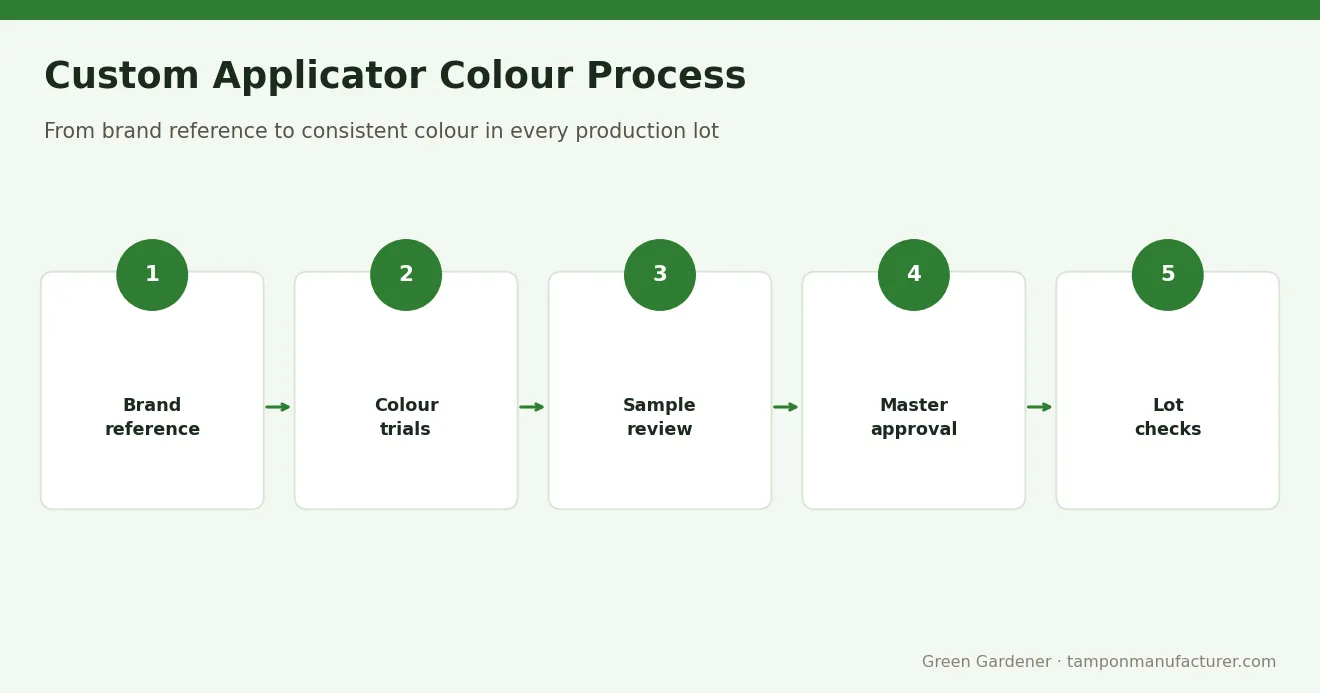
Custom tampon applicator colours are achieved by colouring the applicator material during moulding, matching it to a brand reference and approving a physical master sample before bulk production. Brands can also choose surface finishes and, depending on applicator type, limited decoration. As a factory-direct OEM manufacturer, we guide brands through colour selection, sampling and lot-to-lot consistency checks, so the applicator in the box matches the colour story on the shelf.
Why Applicator Colour Is a Branding Tool
Most tampon packaging looks similar from a distance: a rectangular box, a brand name and an absorbency indicator. The applicator is where a brand can create a memorable experience after purchase. A distinctive colour makes the product recognisable in a bag or drawer, supports colour coding by absorbency and helps a brand stand apart in social media photos and unboxing content.
Colour also communicates positioning. Soft pastels often signal gentle, everyday comfort, deep tones can suggest performance or night use, and translucent or white applicators suggest simplicity. None of these associations are rules, but they shape how consumers read a product before they try it. Choosing applicator colour early, alongside the box design, avoids a mismatch between packaging and product that looks careless on the shelf.
Which Applicators Can Be Coloured
Colour options depend on the applicator material and construction. Moulded plastic applicators offer the widest choice, while cardboard applicators are usually kept close to natural tones.
| Applicator type | Colour options | Notes |
|---|---|---|
| Standard plastic | Wide range of solid and translucent colours | See our plastic applicator tampons |
| Compact plastic | Solid and translucent colours | Telescopic parts can be colour-contrasted |
| Grip-feature plastic | Body and grip colours | Two-tone effects need extra approval |
| Cardboard | Natural, white or limited tints | Usually chosen for a natural look |
Non-applicator (digital) tampons have no applicator to colour, so branding moves to the wrapper and box instead.
How Colour Matching Works
Colour matching turns a brand reference into a repeatable production colour. The usual process is:
- The brand supplies a reference, such as a colour system code or a physical swatch.
- Our team prepares colour trials on the actual applicator material.
- The brand reviews moulded samples under agreed lighting conditions.
- One sample is approved and signed as the master standard.
- Bulk production is checked against that master for every lot.
A colour code on a screen or printed card rarely looks exactly the same on moulded plastic, because material, thickness and surface finish change how light is reflected. That is why approval always happens on physical samples rather than digital files. Samples are provided before bulk production, and the approved colour is recorded in your order specification.
Finishes and Surface Effects
Surface finish changes how a colour looks and how the applicator feels in the hand. Common options include:
- Gloss: smooth and bright, makes colours look saturated.
- Matte or satin: softer appearance, reduces visible fingerprints and glare.
- Pearlescent: a subtle shimmer that suits premium positioning.
- Translucent: lets the pledget show through for a light, clean look.
Some finishes and effects increase cost or narrow the colour range, and not every effect is suitable for every applicator design. Comfort must not suffer for appearance: the insertion tip and barrel need to stay smooth regardless of finish. We confirm which finishes are feasible for your chosen applicator during sampling, and any finish change after approval is treated as a new specification.
Decoration and Printing on Applicators
Some brands want a logo, pattern or absorbency mark directly on the applicator. Feasibility depends on applicator material, shape and the decoration method, and it must never compromise comfort, hygiene or the smooth insertion surface. In many projects, brands achieve the same goal more simply through colour coding and wrapper printing.
| Branding goal | Simplest route | Alternative |
|---|---|---|
| Identify absorbency | Colour per absorbency | Printed wrapper code |
| Show brand name | Wrapper print | Applicator decoration if feasible |
| Premium feel | Pearlescent or matte finish | Two-tone applicator |
| Natural look | Cardboard or white applicator | Translucent plastic |
Ask for a feasibility review before committing artwork, since decoration adds steps, documentation and inspection points.
Colour Consistency Across Lots
A colour that drifts between orders makes a range look inconsistent on shelf and generates consumer questions. Consistency comes from controlled inputs and clear inspection rules. We keep the approved master sample, record the colourant formulation and check production against the standard at set intervals.
Brands should agree on how colour will be judged: under which light source, at what viewing distance and what level of difference is acceptable. Some buyers specify an instrumental colour difference tolerance, while others rely on visual comparison with retained samples. Either approach works when it is written down before production. Retained samples from each lot also help if a question arises later. More detail on documentation is available in our quality control documentation guide.
Material Documentation and Compliance
Colourants become part of the applicator, so brands should treat them as part of the product’s material documentation. Ask your manufacturer for material information covering the base resin and colourant, and confirm that the specification is suitable for the intended use and target markets. We provide documentation on request.
Regulatory expectations differ by market. In the United States, tampons are regulated by FDA, so check current FDA requirements for your product and any material information your regulatory adviser needs. In other markets, confirm requirements with the relevant authority. Keep a copy of the documentation with your product file so it is ready if a retailer or distributor asks. Avoid marketing claims about colourants, such as “non-toxic dyes”, unless you hold specific evidence that supports the exact wording.
For Brands: Planning a Colour Programme
A colour programme works best when it is planned for the whole range, not one product at a time. Decide whether colour will identify absorbency, product line or simply brand identity, then keep that logic consistent on applicators, wrappers and boxes. Limit the number of colours at launch, because each extra colour adds approval work and inventory complexity.
Before requesting trials, prepare a short colour brief that answers these questions:
- What does colour identify: absorbency, product line or brand only?
- Which references should we match, and which is the priority if two conflict?
- Which finish fits your positioning: gloss, matte, pearlescent or translucent?
- Under what lighting will your team approve samples?
- Will future products, such as a night or light line, need extra colours?
Thinking about future extensions now prevents a later colour clashing with the launch range. It also helps retailers, who often prefer a clear and consistent colour logic across a brand block on shelf. Once the brief is agreed, colour trials, sample review and master approval usually move quickly.
Brands building their first range can review applicator options on our private label tampons page and request colour trials with samples.
Request a Quote
Share your applicator type, colour references, preferred finish and absorbency range, and we will prepare colour trials and a quotation. Reach our team through the contact page or on WhatsApp at +86 173 1689 5054 to begin your custom applicator colour project.
Frequently Asked Questions
Can you match my brand’s exact colour on a tampon applicator?
We can match closely to a brand reference on the applicator material, but moulded plastic will never look exactly like a screen or printed card. Final approval is always made on physical samples under agreed lighting, and the approved sample becomes the master standard for production.
Can each absorbency have a different applicator colour?
Yes. Colour coding by absorbency is common and helps consumers choose quickly from a mixed box. Use the same colour key on wrappers, the outer box and the insert so the system is clear, and approve every colour on physical samples before bulk production.
Do custom applicator colours cost more?
Custom colours, special finishes and two-tone effects can add cost compared with standard options, depending on the specification and order volume. Exact pricing is confirmed in your quotation once the colour, finish and range plan are agreed and samples have been approved.
Can cardboard applicators be coloured?
Cardboard applicators are usually supplied in natural or white tones, and some limited tints may be possible. Most brands choosing cardboard want a natural, low-plastic look, so they carry colour on the wrapper and box instead. We confirm which options are feasible during sampling.
How do you keep applicator colour consistent between reorders?
We retain the approved master sample, record the colourant formulation and inspect production against the standard. Agreeing on viewing conditions and acceptable difference before production makes inspection objective, and retained samples from each lot help resolve any later questions quickly and fairly.
Request a Tampon or Pad Quote
Tell us the product, quantity and your market. We reply with options, pricing and sample steps. Prefer chat? WhatsApp +86 173 1689 5054.