
ORGANIC COTTON TAMPON OEM
Organic Cotton Tampon Manufacturer | Private Label OEM
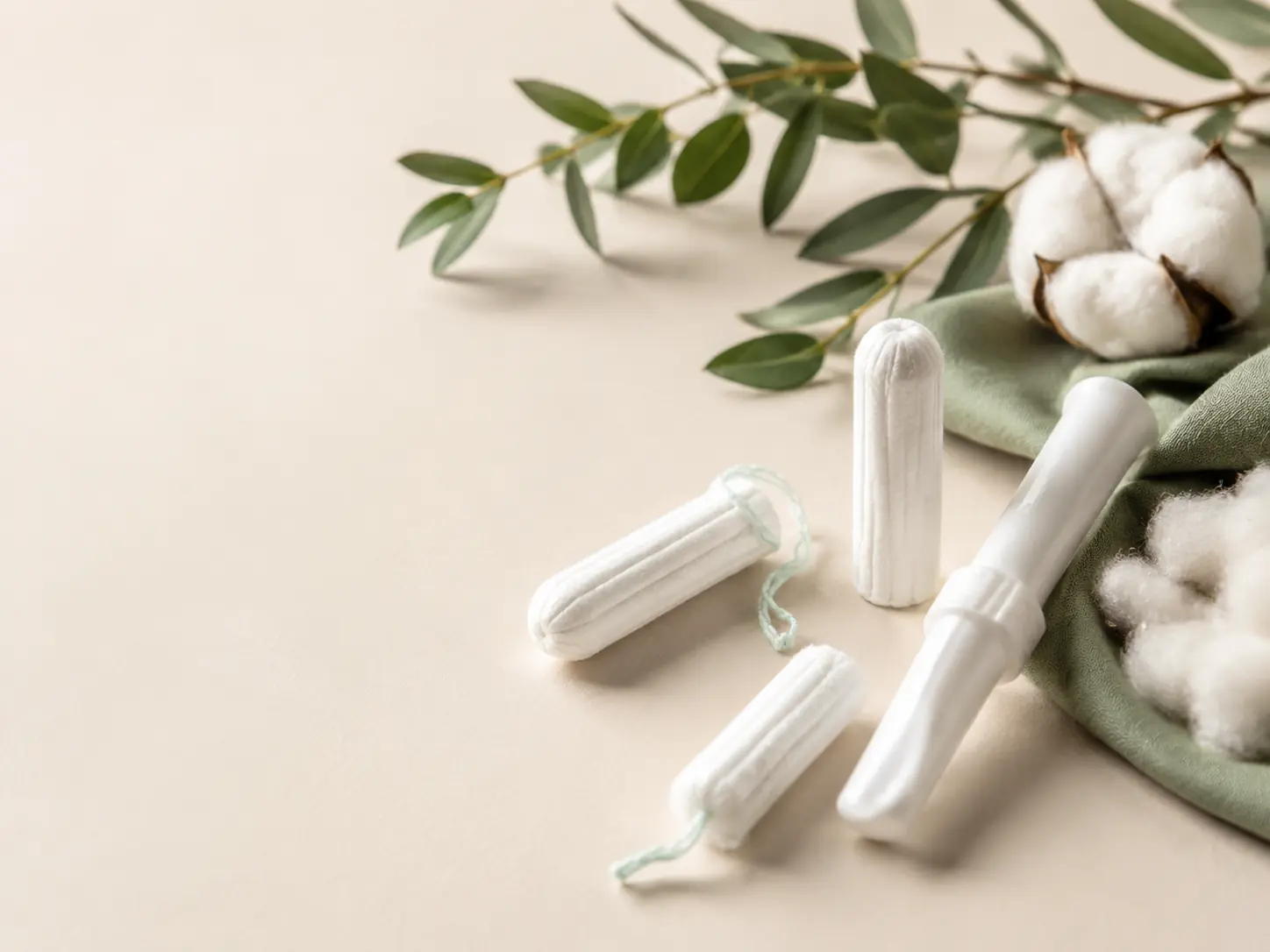
Green Gardener, the specialist B2B period-care team behind TamponManufacturer.com, supports organic cotton tampon projects for brands, retailers and distributors. We coordinate product format, material scope, absorbency program, samples, packaging and documentation around the buyer’s market and approved specification.
Organic cotton material direction
Applicator & non-applicator routes
Custom wrappers & retail boxes
Project-specific document review
PROJECT PRINCIPLE
Approve the exact material, product construction, packaging and permitted claims before commercial production.
QUICK ANSWER FOR BUYERS
What can an organic cotton tampon manufacturer customize?
Green Gardener can evaluate organic cotton tampon projects across non-applicator, standard plastic applicator and compact plastic applicator routes. Customization may cover the absorbency assortment, product construction, individual wrapper, retail box, pack count, artwork and shipping marks. Exact availability, MOQ, price, lead time and documentation depend on the approved SKU.
Start with the market
Country, sales channel and evidence requirements determine the relevant product brief.
Define material scope
State which components are intended to contain organic cotton and which claims are proposed.
Approve one complete SKU
Product, wrapper, retail pack, artwork and inspection reference should be approved together.
PRODUCT ROUTES
Which organic cotton tampon formats can be evaluated?
Choose the insertion format before requesting samples or commercial terms. The format changes the component list, dimensions, packaging space and approval criteria.
ROUTE 01
Non-Applicator Tampons
An applicator-free route in which the tampon, withdrawal string, wrapper and retail pack form the approved product system.
ROUTE 02
Standard Plastic Applicator
A conventional applicator route requiring approval of the tampon, barrel, plunger, grip, wrapper and pack.
ROUTE 03
Compact Plastic Applicator
A compact route requiring confirmation of closed, extended and assembled dimensions plus user instructions and box configuration.
ROUTE 04
Cardboard Applicator
A paper-based applicator route that requires confirmation of the applicator construction, core material, wrapper and pack. This is generally a higher-cost option and is quoted by specification.
Project note: cardboard applicators can be produced, but the construction is generally a higher-cost option and must be reviewed against the exact specification. Biodegradable and plastic-free claims are not automatic; each component and proposed claim requires supporting evidence.
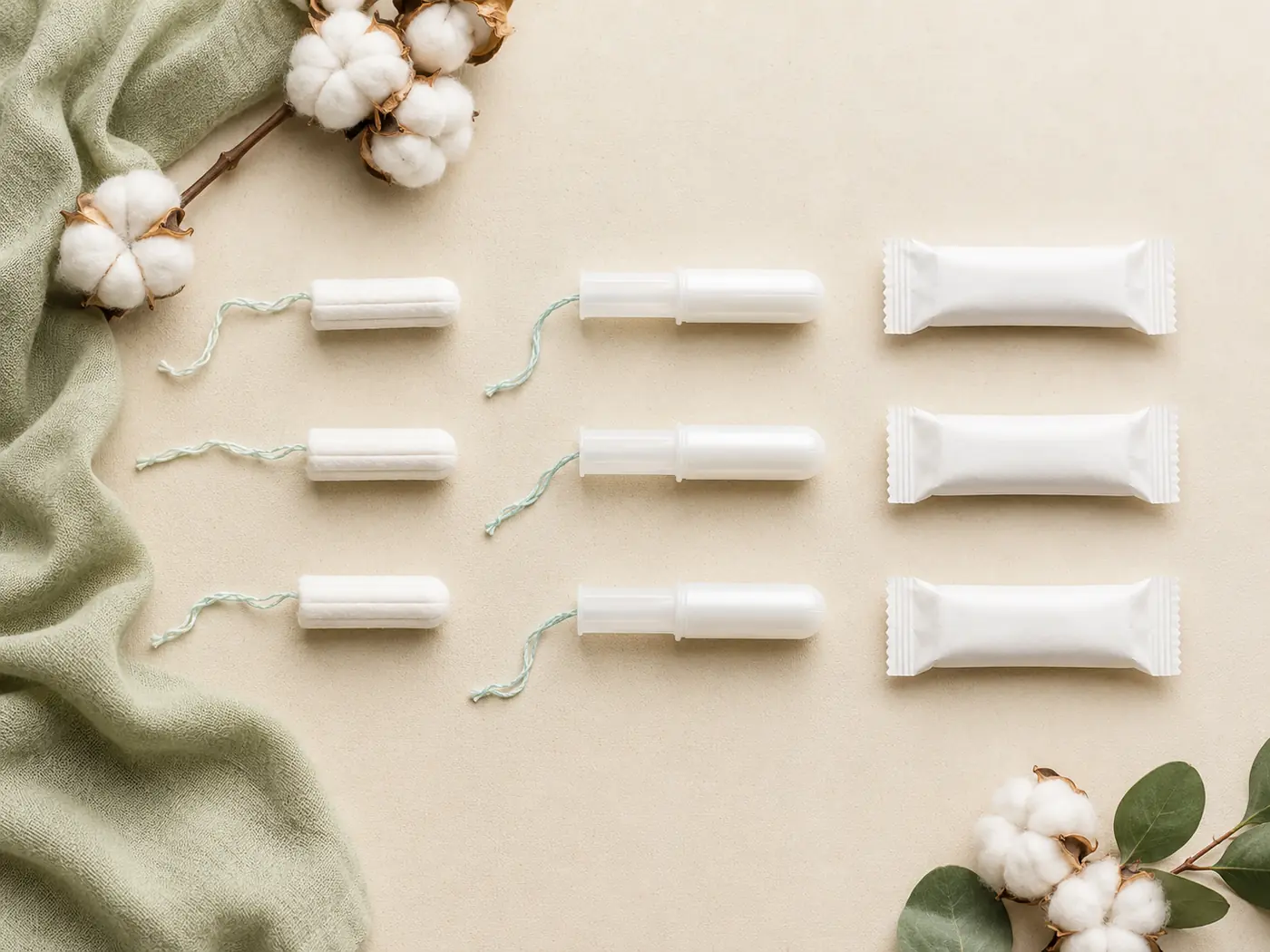
Images illustrate product directions. The approved sample and written specification control the final SKU.
MATERIAL & CLAIM SCOPE
What should “organic cotton” mean in the final specification?
The specification should identify exactly which component uses organic cotton, the applicable composition, the source documentation and the wording proposed for the product or packaging. An organic cotton material certificate does not automatically certify every finished product, component or marketing claim.
Component scope
Identify the absorbent body, cover, string and any other component included in the material claim.
Document scope
Check the issuing body, certified entity, facilities, product categories, validity and shipment evidence.
Label wording
Match the proposed label grade, claim and logo use to the documents applicable to the exact product.
Other requirements
Material certification does not replace product safety, performance, microbiological, quality-system or destination-market review.
RFQ CHECKLIST
What information is required for an organic cotton tampon quotation?
A complete brief lets the product route, material evidence, packaging feasibility and commercial terms be reviewed together.
01
Target market
Country, sales channel and buyer or regulator requirements.
02
Product route
Non-applicator, standard plastic or compact plastic applicator direction.
03
Absorbency program
Requested categories, SKU mix and intended units per retail box.
04
Material claim
Components covered, intended wording and required supporting documents.
05
Packaging brief
Wrapper, box, pack count, languages, barcode and artwork status.
06
Commercial inputs
Estimated quantity, sample destination and desired launch schedule.
ASSORTMENT PLANNING
How should buyers plan absorbency and pack configuration?
The currently confirmed absorbency options are Regular 6–9 g and Super 9–12 g. Each SKU should be linked to its own approved construction, wrapper identification, test target and retail information for the destination market.
| Planning item | What the buyer should define | What is confirmed per project |
|---|---|---|
| Absorbency range | Required categories and number of SKUs | Available construction, dimensions, testing and market labeling |
| Single-SKU packs | Units per box and sales-channel requirements | Box structure, wrapper identification and carton configuration |
| Mixed packs | Requested SKU ratio and total units per box | Product availability, packing feasibility and artwork controls |
| Material wording | Exact organic-cotton statement proposed for each SKU | Applicable evidence, permitted wording and document scope |
Absorbency labels are market-specific. Do not transfer category names, test results or consumer instructions from one SKU or destination market to another without review.
PRIVATE-LABEL PACKAGING
What packaging can be developed for an organic cotton tampon range?
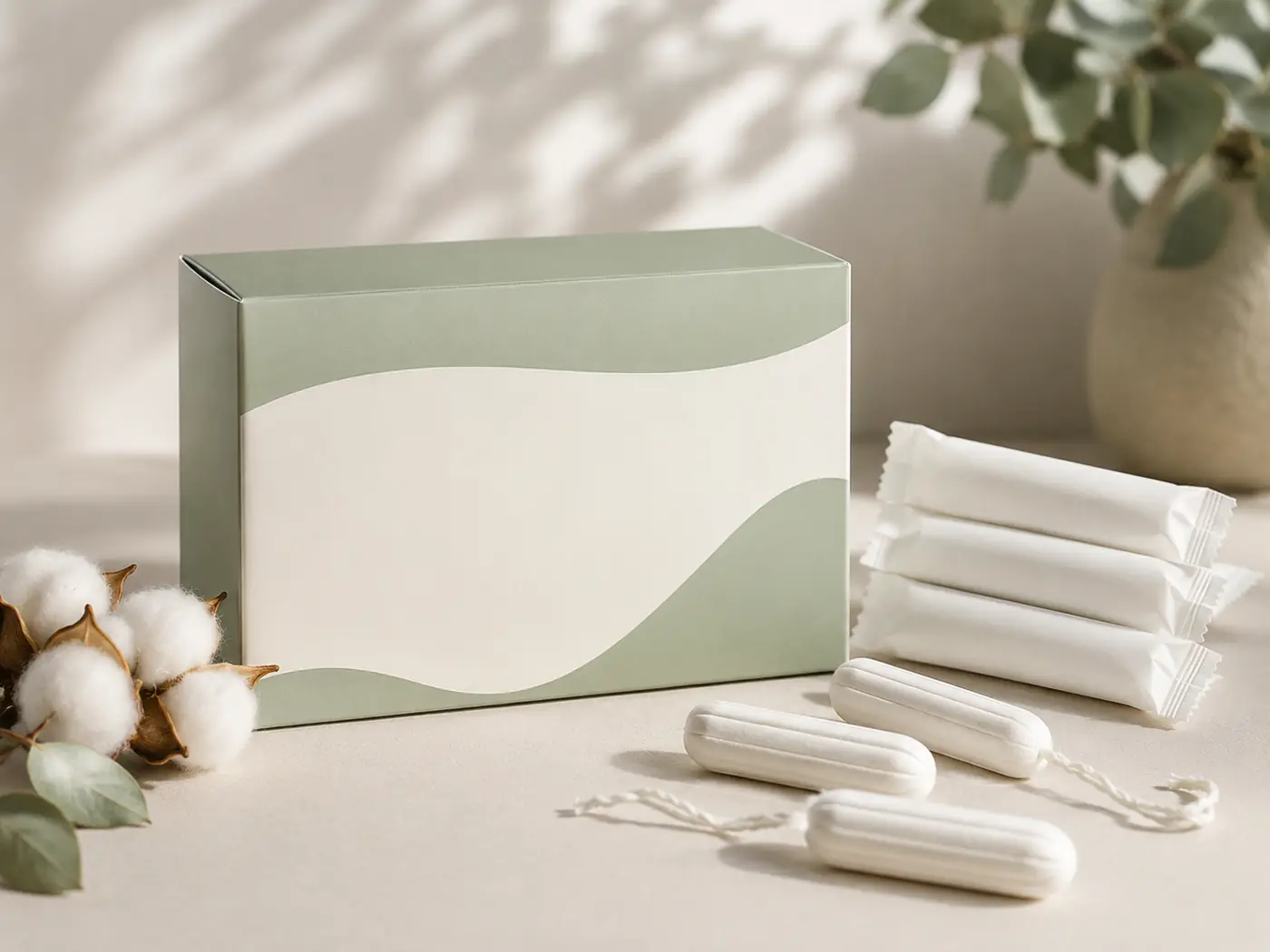
Packaging is developed around the approved product route and destination-market information. Artwork should not be finalized until the product, pack count, material claim and required labeling have been reviewed.
Individual wrapper
Material, print zones, SKU identification and opening direction.
Retail box
Structure, units, languages, barcode and approved claims.
Mixed-pack control
SKU ratio, identification system and packing instructions.
Shipping carton
Case configuration, carton marks and delivery identification.
CERTIFICATION & CLAIM REVIEW
How should GOTS, FDA and environmental claims be checked?
Certification and compliance wording must be tied to the exact product, document owner, scope, validity, production route and destination market. Broad terms such as “GOTS certified,” “FDA approved,” “non-toxic,” “hypoallergenic,” “biodegradable” or “plastic-free” should not be used as default product claims.
GOTS verification
Check the supplier’s current Scope Certificate and obtain shipment-specific evidence where applicable.
U.S. product planning
Review current FDA guidance for performance testing, labeling and premarket submission planning.
Environmental marketing
Substantiate and qualify environmental claims for the whole product or the specifically named component.
PROJECT WORKFLOW
How does an organic cotton tampon OEM project move forward?
The workflow connects material evidence, product sampling, packaging approval and commercial production so each decision remains traceable.
STEP 01
Review the brief
Confirm market, route, absorbency, material scope, pack and quantity.
STEP 02
Match evidence
Review requested material and certification documents for relevance.
STEP 03
Evaluate samples
Approve the relevant product reference and record specification decisions.
STEP 04
Approve artwork
Confirm wrapper, box, claims, barcode and shipping marks.
STEP 05
Produce & deliver
Manufacture, inspect and prepare the agreed shipment documents.
COMMERCIAL PLANNING
What affects MOQ, price and lead time?
Commercial terms are calculated from the approved project rather than a universal price list. Send the main variables below for a comparable quotation.
| Commercial item | Main variables | How it is confirmed |
|---|---|---|
| MOQ | Format, absorbency count, wrapper, box and customization | Confirmed after the complete SKU and packaging brief are reviewed |
| Unit price | Construction, materials, pack configuration, quantity and delivery terms | Quoted for the defined product and quantity; no universal online price |
| Samples | Available reference, customization need, destination and courier | Sample option, cost and timing confirmed before dispatch |
| Lead time | Specification approval, artwork status, materials and order quantity | Scheduled after the order scope and approvals are complete |
| Supply planning | Forecast, SKU mix, approved materials and repeat-order cadence | Reviewed with the buyer before repeat production planning |
| Delivery | Destination, shipment size, freight mode and trade terms | Agreed in the project quotation and order documents |
BUYER QUESTIONS
Organic Cotton Tampon Manufacturing FAQs
These answers define the current project scope and prevent material or certification wording from being applied more broadly than the available evidence.
Does organic cotton material mean the finished tampon is GOTS certified?
Not automatically. The certified entity, product scope, facilities, label grade, validity and applicable shipment evidence must match the exact product and claim.
Which organic cotton tampon formats are currently available?
Non-applicator, standard plastic applicator and compact plastic applicator directions can be evaluated. Exact construction and availability are project-specific.
Do you currently offer biodegradable or cardboard applicators?
Cardboard applicator projects can be produced and reviewed, but the construction is generally a higher-cost option and must be quoted against the exact specification. Biodegradable claims are separate and require evidence for the specific product and packaging components.
Can the product be marketed as hypoallergenic or non-toxic?
These are not default claims. Any safety, sensitivity or “free-from” wording requires evidence appropriate to the exact product, claim and destination market.
Can mixed absorbency packs be developed?
Mixed packs can be evaluated when the selected SKUs and packing configuration are compatible. The ratio, identification and artwork require approval.
How is the MOQ determined?
MOQ depends on format, absorbency mix, materials, wrapper, retail box and customization. The current minimum is confirmed after the full brief is reviewed.
Can samples be reviewed before production?
Relevant available samples can be reviewed before commercial production. Sample options, cost, timing and destination are confirmed per request.
Which documents can be provided?
Available material, test, quality and certification documents are matched to the confirmed product and target market. Send the buyer or regulator checklist for review.
START WITH THE PRODUCT BRIEF
Developing an organic cotton tampon line?
Send the target market, applicator or non-applicator format, Regular/Super quantities, intended organic-cotton claim, PE or paper wrapper preference, units per box, artwork status and required documents. Green Gardener will review the relevant product route, samples and quotation inputs.