
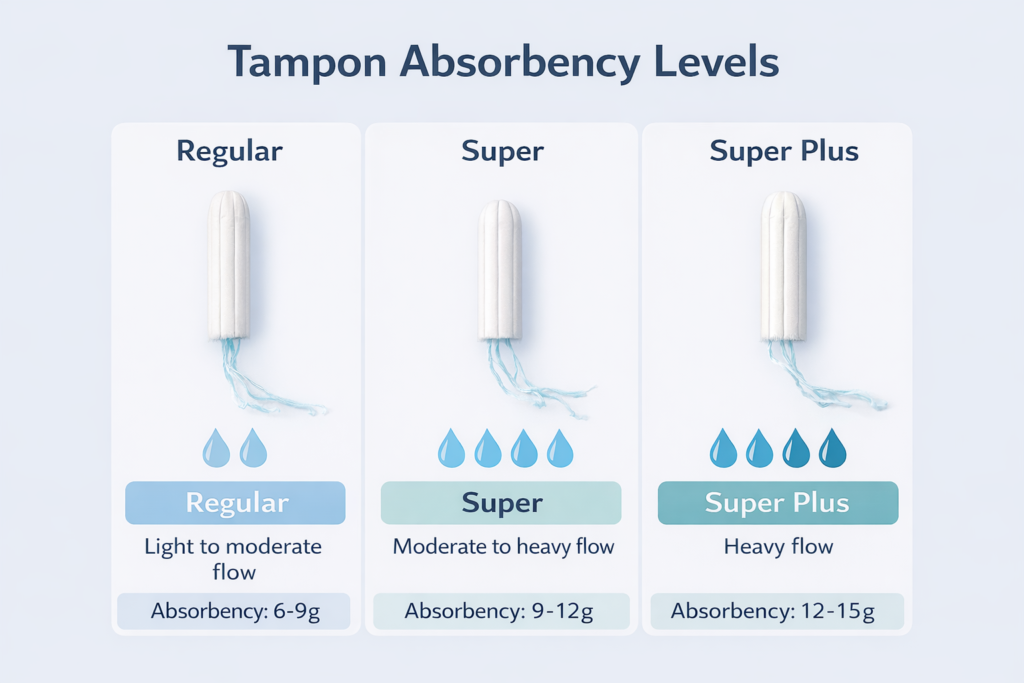
Slim, mini, small and beginner tampons are not automatically Light-absorbency tampons. For U.S. labeling, Light is a defined absorbency term for tampons that absorb 6 grams or less, while slim or mini usually describes a physical profile, applicator format or marketing position.
Green Gardener, the B2B period-care brand team behind TamponManufacturer.com, reviews OEM and private-label briefs by separating physical dimensions, tested absorbency, insertion format, materials and packaging. This prevents a compact design term from being mistaken for a verified performance specification.
Buyers searching for a slim tampon supplier or mini tampon manufacturer often begin with a consumer-facing name. A production-ready RFQ needs more detail. It should define the target market, finished-product dimensions, absorbency range, applicator or non-applicator format, core material, wrapper, pack count, quantity per SKU and required documentation. This guide explains how to translate the marketing idea into a specification that a supplier can review.
Are slim, mini, small and Light tampons the same?
No. These terms can describe different aspects of a tampon, and their meaning can change between markets or brands. A buyer should never rely on the product name alone when comparing quotations.
Slim
What it may describe: a narrower product profile, a narrower applicator barrel or a compact positioning concept.
What must be specified: finished tampon diameter and length, applicator dimensions if applicable, and the tested absorbency range. “Slim” by itself does not prove Light absorbency.
Mini or small
What it may describe: a compact physical design, a regional product name or a smaller pack and applicator presentation.
What must be specified: the exact dimensions, insertion format, absorbency requirement and packaging configuration. Mini is not a universal technical category.
Light
What it may describe: a regulated absorbency term in markets such as the United States. Under 21 CFR 801.430, Light means an absorbency of 6 grams or less.
What must be specified: the target market, required test method, production-run acceptance criteria and package labeling. A buyer should verify local rules rather than transferring U.S. terminology automatically to another market.
Beginner or teen
What it may describe: audience positioning or an assortment concept rather than a medical, performance or regulatory category.
What must be specified: the actual dimensions, absorbency, format, instructions and market-specific labeling. These words do not establish that a product is safer, easier or more comfortable.
What should a slim or mini tampon buyer specify separately?
1. Physical design
Define the finished tampon length and diameter rather than asking only for “small” or “slim.” For an applicator product, add the barrel profile, total applicator length, insertion tube and plunger requirements, grip concept and whether the pack should use a standard or compact format. Physical dimensions should be recorded on a controlled specification or approved drawing.
2. Absorbency and market terminology
Specify the target absorbency term and the measurable range required for the destination market. In the United States, the current regulation defines Light as 6 grams or less and Regular as more than 6 grams up to and including 9 grams. The regulation also calls for labeling that helps consumers select the minimum absorbency needed. See our broader tampon absorbency guide for the full Light-to-Ultra framework.
3. Applicator or non-applicator format
A slim brief can be developed around different insertion formats, but the routes are not interchangeable. Green Gardener currently reviews briefs for standard and compact plastic applicator tampons and non-applicator tampons. Cardboard applicators are not currently available from the production route. Exact slim, mini or Light configurations must be confirmed against the requested specification.
4. Core and component materials
State whether the brief calls for cotton, rayon or a defined blend, together with wrapper, withdrawal cord and applicator component requirements. The U.S. FDA notes that tampons are typically made of cotton, rayon or a blend of the two. Buyers considering an organic cotton tampon project should identify the exact material and documentary scope to be reviewed; an organic claim does not by itself establish finished-product safety, comfort, biodegradability or regulatory status. Our tampon material supplier guide explains the sourcing distinctions.
5. Wrapper, retail box and assortment
Define individual wrapper material, printing requirements, barcode, retail pack count, carton markings and language versions. If the product will sit in a mixed-absorbency assortment, specify the number of each SKU in the pack and how each absorbency will be identified. A compact-looking pack does not change the testing and labeling requirements of the individual tampon.
How should buyers evaluate a slim tampon OEM supplier?
Start with market fit. Ask whether the supplier can review the terminology, labeling and evidence expected in the intended sales market. “Light,” “mini” and “beginner” should not be copied from a competitor’s pack without confirming what each term means for the project.
Request a controlled product specification. The specification should separate dimensions, absorbency, materials, construction, packaging and acceptance requirements. This creates a reliable basis for sampling, quotation and change control.
Approve a physical reference sample. Evaluate the available sample against the written brief and record which version becomes the approved reference. A visual comparison alone cannot verify absorbency, material identity or market compliance.
Review product-specific evidence. Documentation should match the exact material, configuration, production route and destination market. A general factory document or a certificate for another product should not be treated as proof for the proposed finished tampon.
Compare commercial terms only after the specification is clear. MOQ, sample scope, lead time, tooling, testing, artwork work and freight depend on the final configuration and quantity per SKU. Quotes built from different assumptions are not directly comparable.
What evidence supports a Light tampon project?
For a U.S.-market project, 21 CFR 801.430 defines absorbency terms, test requirements and consumer labeling elements. The FDA’s current tampon information also states that U.S. tampons are subject to FDA review before legal sale and that manufacturers provide labeling and performance data. Those sources are useful planning references, but the buyer remains responsible for confirming the regulatory route and final claims for the exact product and market.
The FDA issued a draft menstrual-products guidance in October 2025 covering performance testing and labeling recommendations. It is marked “not for implementation” and contains non-binding recommendations, so a buyer should not present it as a final requirement.
Supplier verification rule: a narrower tampon or applicator is a dimensional feature; Light is an absorbency classification where the market defines it. Both must be documented independently.
How should a brand plan a slim or mini assortment?
A focused launch may begin with one clearly defined SKU, while a broader retail line may combine Light and Regular products or pair applicator and non-applicator formats. The right structure depends on the retailer brief, target market, shelf space, forecast and packaging economics. The supplier should not assume that all absorbencies can use the same finished dimensions or components.
Brands should also distinguish product architecture from communication. A smaller-looking applicator, a slim core and a Light label may coexist in one product, but each element needs its own specification and supporting evidence. If the business goal is an entry-level assortment, the packaging can explain format and absorbency without making unsupported claims about ease, comfort or suitability for a particular age group.
What information is needed for a supplier quotation?
A useful slim, mini or Light tampon RFQ should include the following fields in one document:
Target market: country or region, sales channel and required language versions.
Product positioning: slim, mini, small or entry-level concept, with any proposed on-pack wording clearly marked as a claim to review.
Format: non-applicator, standard plastic applicator or compact plastic applicator.
Physical specification: requested tampon dimensions and, where applicable, applicator dimensions and grip concept.
Absorbency: intended term, measurable range, test or market reference and planned assortment.
Materials and packaging: core brief, component requirements, individual wrapper, retail pack count, artwork status, barcode and carton markings.
Commercial inputs: estimated quantity per SKU, delivery destination, required delivery window and documentation list.
Sending these details at the beginning reduces revision cycles and allows the supplier to identify which items require confirmation before sampling or quotation. For a broader project workflow, see our private-label tampon program.
Frequently asked supplier questions
Are slim and Light tampons the same?
No. Slim generally describes a physical profile or marketing concept. Light is an absorbency term in markets that define it. A product can look slim without meeting a particular Light-absorbency specification, so dimensions and absorbency must be confirmed separately.
Is mini a regulated tampon size?
Mini is not a universal regulated size. Its meaning can vary by brand or region. A buyer should replace the word with exact dimensions, format and absorbency requirements in the production brief.
Can an entry-level assortment use applicator or non-applicator tampons?
Either format may be considered, depending on the market and confirmed specification. The supplier should review the format, dimensions, labeling, instructions and evidence rather than assuming one route is universally suitable for first-time users.
Can organic cotton be used for a slim or Light project?
An organic cotton route may be reviewed, but the exact core, construction, absorbency, documentary scope and market requirements must be confirmed. The material description does not replace finished-product testing or regulatory review.
Does Green Gardener guarantee every slim or mini configuration?
No. Green Gardener reviews each brief against available production routes. Standard and compact plastic applicator products and non-applicator products can be reviewed, while the exact slim, mini or Light configuration remains subject to specification, sampling and documentation confirmation. Cardboard applicators are not currently available.
What is the fastest way to receive a comparable quote?
Send one consolidated brief with the target market, format, dimensions, absorbency, core material, wrapper, pack count, quantity per SKU, documentation requirements and delivery destination. The supplier can then identify missing decisions and quote against a defined scope.
Send your slim tampon OEM brief
Tell Green Gardener the target market, format, physical dimensions, absorbency, core, wrapper, pack count, quantity per SKU and required documentation. We will review the brief against the available OEM route and identify the points that need confirmation.