
Quick answer
A 70% cotton and 30% viscose tampon combines natural cotton with viscose, a regenerated cellulose fiber that absorbs readily. The blend gives buyers a familiar, practical core that sits between all-cotton and all-viscose tampons. Absorbency is defined by test results and labeled with standard terms, so ask your supplier which absorbencies are available and how fiber content is declared.
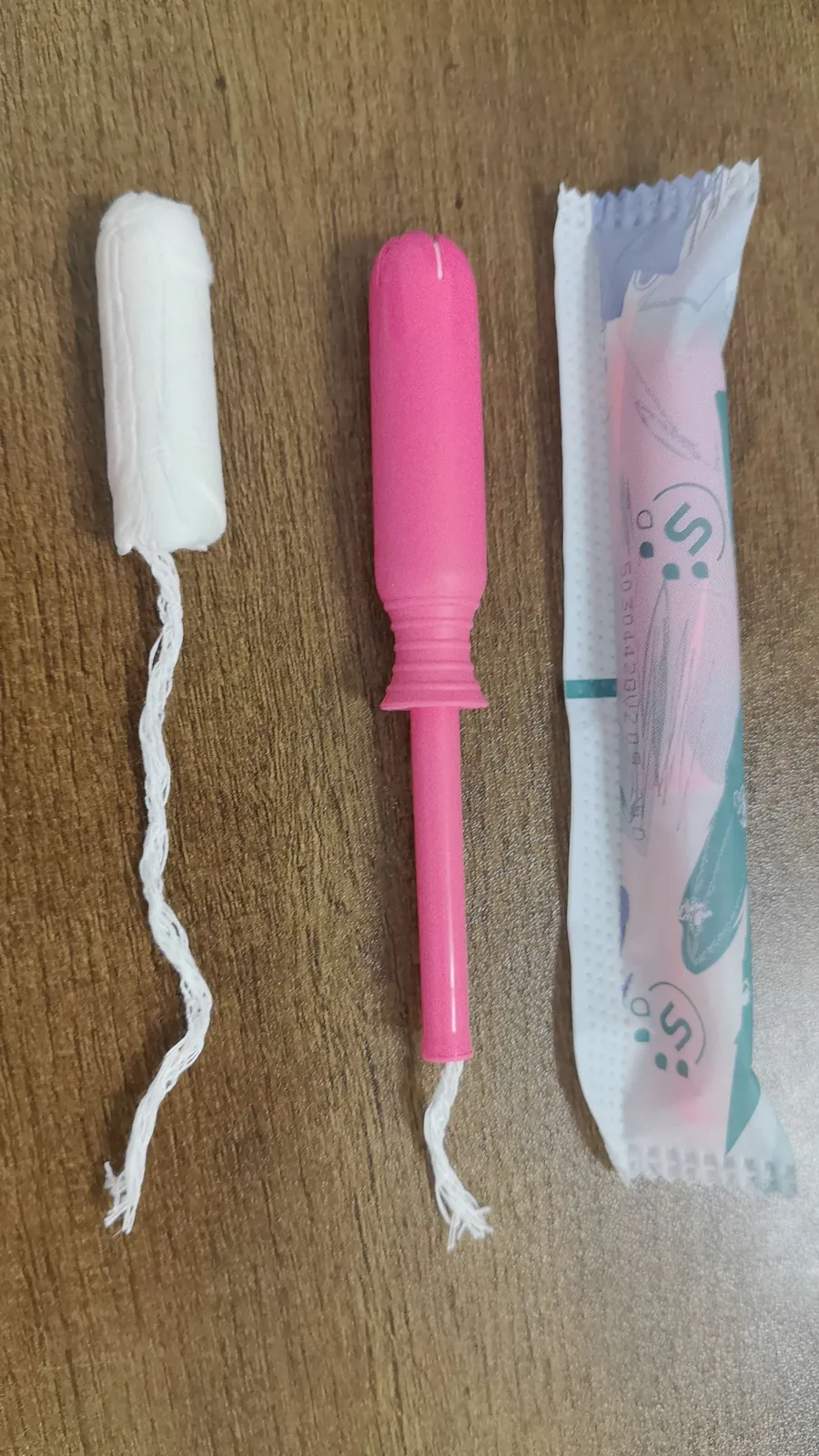
A 70% cotton and 30% viscose tampon has an absorbent core made mostly of cotton, with viscose added to support absorbency and consistency. For buyers, it is a practical middle ground between 100% cotton tampons and all-viscose tampons. Our in-stock plastic applicator tampons use exactly this blend, with a long PE applicator, a cotton withdrawal string and an individually sealed PE wrapper. This guide explains what the blend means for performance, labeling and buying decisions.
The Two Fibers in the Blend
Cotton is a natural seed fiber made largely of cellulose. It is familiar to consumers, widely used in hygiene products and easy to explain on packaging. Viscose, also called rayon in some markets, is a regenerated cellulose fiber made from wood pulp that has been dissolved and reformed into fibers. Because it starts from cellulose, viscose behaves in a broadly similar way to cotton, but its fiber structure can be engineered for absorbency and uniformity.
Tampon makers have used cotton, viscose and blends of the two for many years. Each approach has its supporters, and none is automatically better: the right choice depends on your market, positioning and price point.
Blend vs 100% Cotton vs 100% Viscose
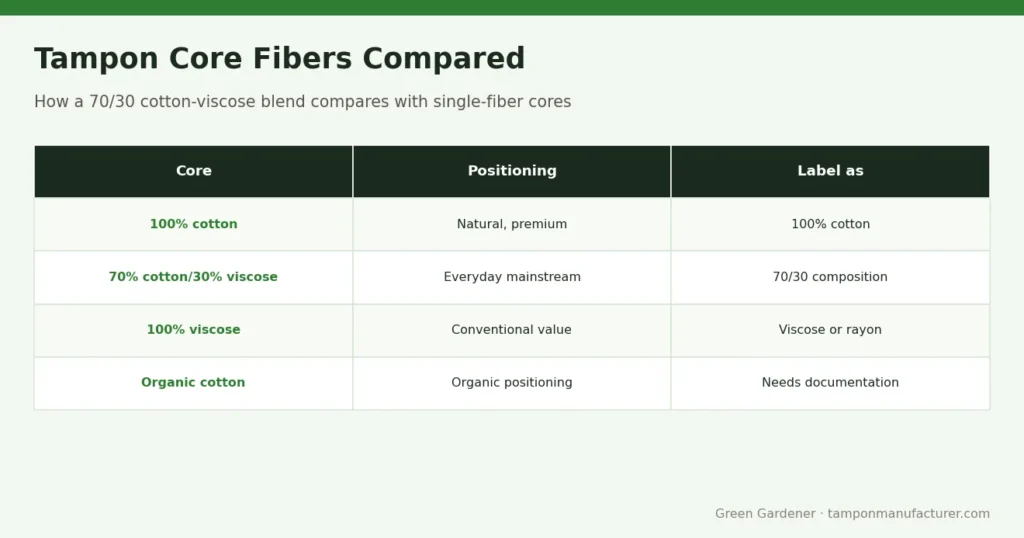
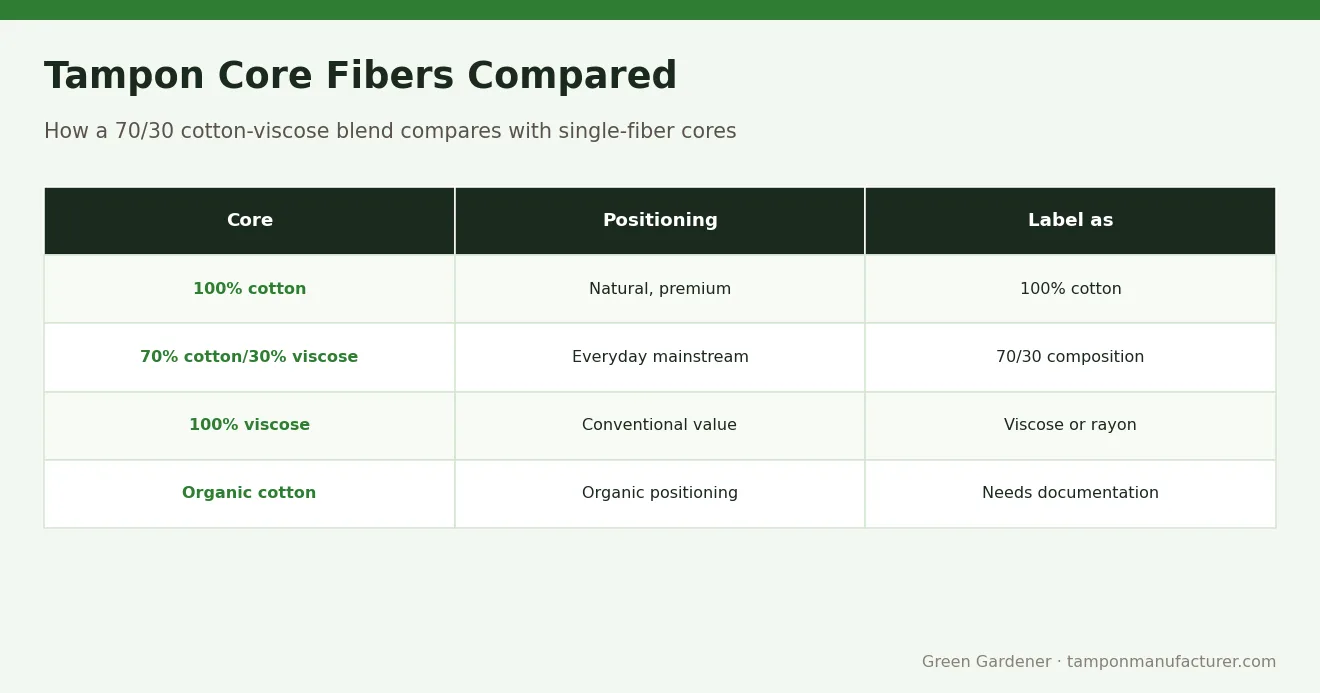
The table summarises how buyers usually compare the three common core options. These are general characteristics; actual performance always depends on the finished product and its test results.
| Core type | Typical positioning | Points to consider |
|---|---|---|
| 100% cotton | Natural or premium story; organic options available | Often priced higher; claims need documentation |
| 70% cotton + 30% viscose | Mainstream everyday tampon with a cotton-led story | Fiber content must be described accurately |
| 100% viscose | Common in conventional value tampons | Less suited to cotton-focused messaging |
If your brand is built around natural or organic claims, a full cotton core may fit better; see our organic cotton tampons page for that route. If you want a reliable everyday tampon with a cotton-majority core and a ready supply, the blend is a sensible choice.
How the Blend Relates to Absorbency
Absorbency is not set by fiber type alone. It also depends on how much fiber is in the pledget, how it is formed and compressed, and the finished tampon design. That is why absorbency is defined by testing, not by the material list.
In the United States, FDA labeling rules at 21 CFR 801.430 group tampons into standard absorbency terms based on results from the syngina test method. The ranges are shown below.
| FDA absorbency term | Absorbency range (grams) |
|---|---|
| Light | 6 g and under |
| Regular | 6 to 9 g |
| Super | 9 to 12 g |
| Super Plus | 12 to 15 g |
| Ultra | 15 to 18 g |
A blended core can be produced at different absorbency levels by adjusting the fiber quantity and construction. For the in-stock tampons, tell us the absorbency you need and we will confirm what is in stock. Our article on the syngina absorbency test explains how these numbers are measured.
Safety Messaging and TSS
Buyers sometimes ask whether cotton or viscose affects the risk of toxic shock syndrome (TSS). FDA guidance links TSS risk to tampon absorbency, which is why users are advised to choose the lowest absorbency they need and follow the package instructions. The key guidance focuses on absorbency: users should choose the lowest absorbency that meets their needs and follow the package instructions.
For your packaging, the practical point is to include the required TSS information and absorbency labeling, and to avoid claims that suggest one fiber is safer unless you have strong evidence. Encourage consumers to read the leaflet and to consult a doctor if they have questions or symptoms.
Labeling Fiber Content Correctly
Fiber content is a common question from retailers, marketplaces and consumers. Even where it is not mandatory in exactly the same form everywhere, clear disclosure builds trust. Keep these points in mind:
- Describe the core accurately, for example “absorbent core: 70% cotton, 30% viscose”.
- Do not call a blended tampon “100% cotton”, “pure cotton” or “all-cotton”.
- Use “cotton-rich” or similar wording only if your compliance adviser agrees it is fair for your market.
- List other components separately where required, such as the PE applicator, PE wrapper and cotton string.
- Check whether your market uses “viscose”, “rayon” or another term on labels.
For the United States, check current FDA requirements. For Canada, Australia or the GCC, tampons are regulated: confirm with Health Canada, the TGA or the SFDA before finalising artwork.
Fiber Processing and Whitening
Buyers also ask how the fibers are cleaned and whitened. Both cotton and viscose for hygiene use are typically purified and bleached before they are formed into tampons. Regulators and consumers pay close attention to the bleaching method, because older elemental chlorine processes were associated with trace dioxin concerns. Today, elemental chlorine-free and totally chlorine-free processes are widely used across the industry.
When you compare suppliers, ask which whitening process is used for each fiber and what test documentation is available for your market. Avoid printing processing claims on packaging unless the supplier can document them. Our guide to chlorine-free bleaching and dioxin testing explains the terms buyers see most often and how to request supporting evidence.
Who the Blend Suits
The 70/30 blend works well for distributors supplying pharmacies and convenience stores, institutions buying for restrooms and free-provision schemes, and start-up brands that want a dependable product while they build demand. It pairs naturally with the long plastic applicator used on our stock line, which many consumers find comfortable and easy to use. Learn more about that format on our plastic applicator tampons page.
Because our stock tampons have no minimum order quantity, you can test the blend in your market before choosing a custom specification. If you want your own retail cartons, custom printed color boxes require a minimum of 5,000 boxes from our color-box supplier.
Questions Buyers Should Ask
Whichever core you choose, ask your supplier for clear answers in writing:
- What is the exact fiber composition of the absorbent core?
- Which absorbencies are available, and what test method supports them?
- How are the fibers whitened or processed, and what documentation is available?
- What materials are used for the applicator, string and wrapper?
- Can the specification stay consistent across reorders?
We provide documentation on request so you can review these points against your market’s requirements.
Request Stock Pricing
If a 70% cotton and 30% viscose tampon suits your range, send us your destination country, estimated quantity and the absorbency you need. We will confirm what is in stock and quote in writing. Contact us through the contact page or on WhatsApp at +86 173 1689 5054.
Frequently Asked Questions
Is a cotton and viscose blend tampon as good as a 100% cotton tampon?
It is a different positioning rather than a lower standard. Both can perform well when made and tested properly. A full cotton core suits natural or organic messaging, while a 70/30 blend is a practical everyday option. Choose based on your market, claims and price point.
Is viscose the same as rayon?
Viscose is a type of rayon, a regenerated cellulose fiber made from wood pulp. Different markets and regulators use different terms on labels, so check which term your destination market expects. Whatever term you use, describe the fiber content of the core accurately on packaging and product listings.
Does the blend change absorbency?
Fiber type is only one factor. Absorbency also depends on fiber quantity, compression and tampon design, and it is confirmed by testing such as the syngina method. For our stock tampons, tell us the absorbency you need and we will confirm what is currently in stock.
Can I label the blend tampon as a cotton tampon?
Avoid wording that implies the core is all cotton. State the composition, for example 70% cotton and 30% viscose, and check any descriptive phrases such as cotton-rich with your compliance adviser. Accurate labeling protects your brand with retailers, marketplaces and consumers.
Can I order the blend tampon without a minimum?
Yes. Our in-stock 70/30 blend tampons with a long PE applicator have no minimum order quantity. If you want them packed in custom printed color boxes with your brand, our color-box supplier requires a minimum of 5,000 boxes per order.