bulk tampons

Looking to buy tampons in large quantities? This category covers everything about bulk tampons, including tips for schools, workplaces, retailers, and brand startups. Find guides on choosing the right size (Regular or Super), deciding between plastic or paper applicators, comparing prices, and selecting trusted suppliers. Learn how to save costs, ensure steady supply, and even start your own private label tampon brand.

Period Underwear Manufacturing: The Complete B2B Guide for Brands Entering the Fastest-Growing Category in Feminine Hygiene (2026)

Period Underwear Manufacturing: The Complete B2B Guide for Brands Entering the Fastest-Growing Category in Feminine Hygiene (2026)

TL;DR: Period underwear is the fastest-growing segment in the global feminine hygiene market, projected to grow from USD 199 million in 2026 to USD 875 million by 2035 at an 18.2% CAGR. For brands and retailers, it represents a high-margin, high-loyalty product category — but manufacturing requires strict material certification, multi-layer construction expertise, and PFAS-free
Period Underwear Manufacturing: The Complete B2B Guide for Brands Entering the Fastest-Growing Category in Feminine Hygiene (2026) Read More »

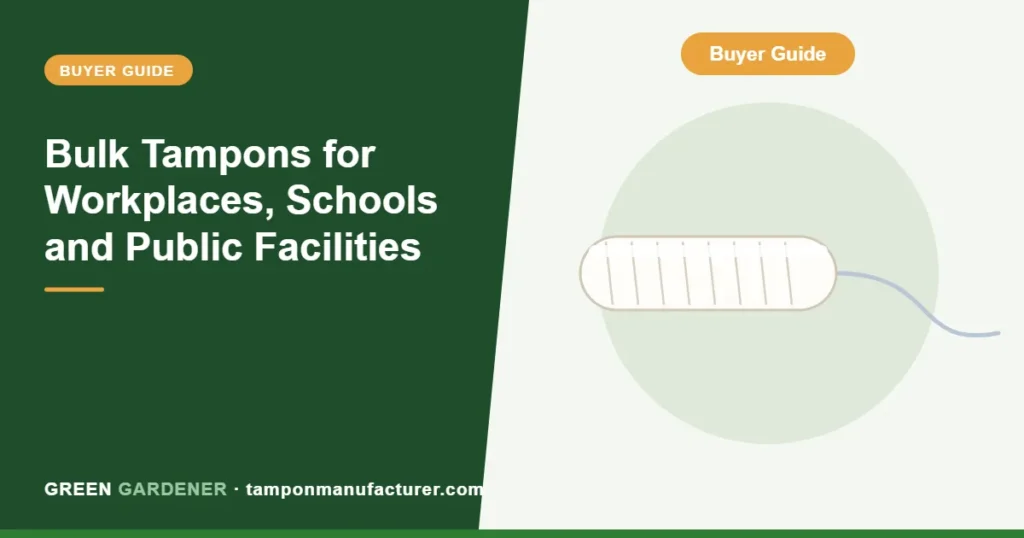
Bulk Tampons for Workplaces, Schools and Public Facilities

Bulk Tampons for Workplaces, Schools and Public Facilities

Workplaces, schools, campuses, hospitality groups and public facilities need tampons that fit their users, dispensers, storage conditions and replenishment process. A successful bulk program starts with a clear product and packaging specification rather than a generic case-price comparison. Define the Institutional Use Case Environment Planning focus Workplaces Restroom count, employee access, refill frequency and discreet

Bulk Tampons for Workplaces, Schools and Public Facilities Read More »

Digital Tampons for Private Label Brands: OEM Buyer Guide

Digital Tampons for Private Label Brands: OEM Buyer Guide

Digital tampons, also called non-applicator tampons, offer a compact product format without an applicator component. They can suit private-label brands, retailers and distributors serving markets where this format is familiar. Why Brands Consider Non-Applicator Tampons Compact product and retail packaging No separate applicator component Suitable for multiple absorbency levels Potential fit for retail, e-commerce and

Digital Tampons for Private Label Brands: OEM Buyer Guide Read More »

How Tampons Are Engineered and Manufactured: B2B Guide

How Tampons Are Engineered and Manufactured: B2B Guide

Tampon manufacturing converts selected absorbent fibers into a controlled product specification through material preparation, core formation, string attachment, shaping, wrapping and inspection. For private-label buyers, the most important question is whether the finished product matches the approved specification and supporting documentation. 1. Raw Material Review The project begins with the proposed absorbent material, cover layer,

How Tampons Are Engineered and Manufactured: B2B Guide Read More »

How to Choose a 100% FDA & CE Compliant Organic Tampon Manufacturer in 2026

How to Choose a 100% FDA & CE Compliant Organic Tampon Manufacturer in 2026

The global feminine care market is undergoing a massive shift. Modern consumers are no longer buying just any period products; they are actively demanding “Clean Period Care.” They closely read ingredient lists, opting for 100% organic cotton, chlorine-free bleaching, and plastic-free applicators. For DTC brands, wellness startups, and retail buyers, this eco-conscious wave represents a

How to Choose a 100% FDA & CE Compliant Organic Tampon Manufacturer in 2026 Read More »

Sourcing Private Label Tampons: Quality and Compliance Checklist

Sourcing Private Label Tampons: Quality and Compliance Checklist

Quick answer: A quality-and-compliance checklist for private-label tampons should cover the factory’s process control and hygiene, product safety and material specifications, market-specific documentation (FDA for the US, CE and technical files for the EU), test reports that match your exact SKU, and clear labeling requirements. Confirm each item in writing before committing, and align packaging

Sourcing Private Label Tampons: Quality and Compliance Checklist Read More »

How to Evaluate a Tampon Manufacturer: Safety & Compliance Guide

How to Evaluate a Tampon Manufacturer: Safety & Compliance Guide

Quick answer: To evaluate a tampon manufacturer’s safety and compliance, verify the quality-management system (ISO 13485 / ISO 9001), request current certificates and check their scope and validity, review recent third-party or batch test reports, and confirm the documentation your destination market expects (FDA for the US, CE and technical files for the EU). Treat

How to Evaluate a Tampon Manufacturer: Safety & Compliance Guide Read More »

Feminine Hygiene Product Certification Guide

Feminine Hygiene Product Certification Guide

Required Certifications for Feminine Hygiene Products Feminine hygiene products, including sanitary pads and tampons, may require FDA registration, CE marking, and ISO certification depending on the target market. Compliance ensures product safety, legal market access, and consumer trust. Certification Requirements by Market United States (FDA) European Union (CE Marking) International Standards (ISO) Importance of Certification

Feminine Hygiene Product Certification Guide Read More »

China vs Turkey Tampon Manufacturer: Cost, MOQ, Quality & Shipping Comparison (2026)

China vs Turkey Tampon Manufacturer: Cost, MOQ, Quality & Shipping Comparison (2026)

China vs Turkey Tampon Manufacturer Which Is Better: China or Turkey for Tampon Manufacturing? China and Turkey are two major sourcing destinations for tampon manufacturing. China offers lower cost and more flexible MOQ, while Turkey provides faster shipping to Europe but at higher production costs. Cost Comparison Factor China Turkey Unit Cost Lower Higher Raw

China vs Turkey Tampon Manufacturer: Cost, MOQ, Quality & Shipping Comparison (2026) Read More »

Tampon factory

How Tampon Fibers Are Processed Before Production

Before a tampon is formed, compressed, wrapped, and packaged, the absorbent fiber must be prepared correctly. Fiber processing is one of the most important upstream stages in tampon production because it affects absorbency, cleanliness, product uniformity, and manufacturing stability. For brands and buyers, understanding how fibers are processed helps explain why raw material quality alone

How Tampon Fibers Are Processed Before Production Read More »

Get a Quote