
Tampons are classified under Harmonized System heading 9619, which covers sanitary towels (pads) and tampons, napkins and similar articles of any material. The first six digits are shared internationally, but each country adds its own national subheadings, so the full tariff code, duty rate and taxes depend on where you import. Every shipment also needs consistent documents, typically a commercial invoice, packing list, transport document and, where useful, a certificate of origin. This guide explains the basics for importers.
What the HS Code Does
The Harmonized System (HS), maintained by the World Customs Organization, is the common language customs authorities use to classify goods. The code on your import declaration determines the duty rate, any import taxes, statistical reporting and whether extra controls apply. A wrong code can lead to underpaid duty, penalties, delays or goods being held for review.
Importers are legally responsible for the classification declared on entry in most countries, even when a broker files on their behalf. That is why brands should understand the basics rather than relying solely on a code printed on a supplier invoice.
Where classification is genuinely uncertain, many customs authorities offer binding rulings, such as Binding Tariff Information in the EU or advance rulings in the US. A ruling gives legal certainty for future shipments of the same product and can be worth requesting before a large or long-term import programme begins.
Heading 9619: Where Tampons Belong
Since the 2012 edition of the HS, sanitary hygiene articles have had their own heading, 9619, regardless of the material they are made from. The heading text covers sanitary towels (pads) and tampons, napkins and napkin liners for babies and similar articles. In practice this means tampons, pads and panty liners generally sit under the same heading.
| Level | Digits | Who sets it |
|---|---|---|
| Chapter | 96 | WCO, international |
| Heading | 9619 | WCO, international |
| HS subheading | 9619.00 | WCO, international |
| National subheading | 8 to 10 digits | Each country or customs union |
The national digits often distinguish products by material or type, and some countries split tampons from pads at this level. Always check the current tariff schedule of the importing country, or ask your customs broker to confirm the full code.
Why National Codes and Rates Vary
Beyond six digits, each customs territory writes its own subdivisions. The US uses the Harmonized Tariff Schedule, the EU uses the Combined Nomenclature with TARIC measures, and the UK has its own Global Tariff. Gulf states, Australia and Canada maintain their own schedules too.
Duty rates and taxes also vary widely. Some markets have reduced or removed sales taxes on period products; for example, the UK applied a zero rate of VAT to women’s sanitary products from January 2021. Others apply standard rates. Goods of Chinese origin may also face additional duties under trade measures in certain countries, which change over time. Confirm the current position with your broker before you calculate landed cost.
Core Customs Documents
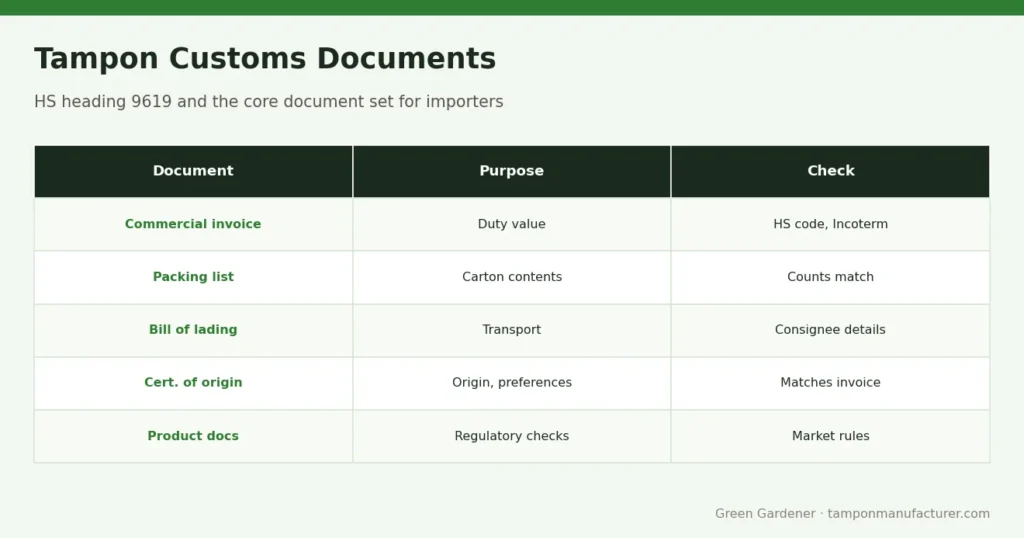
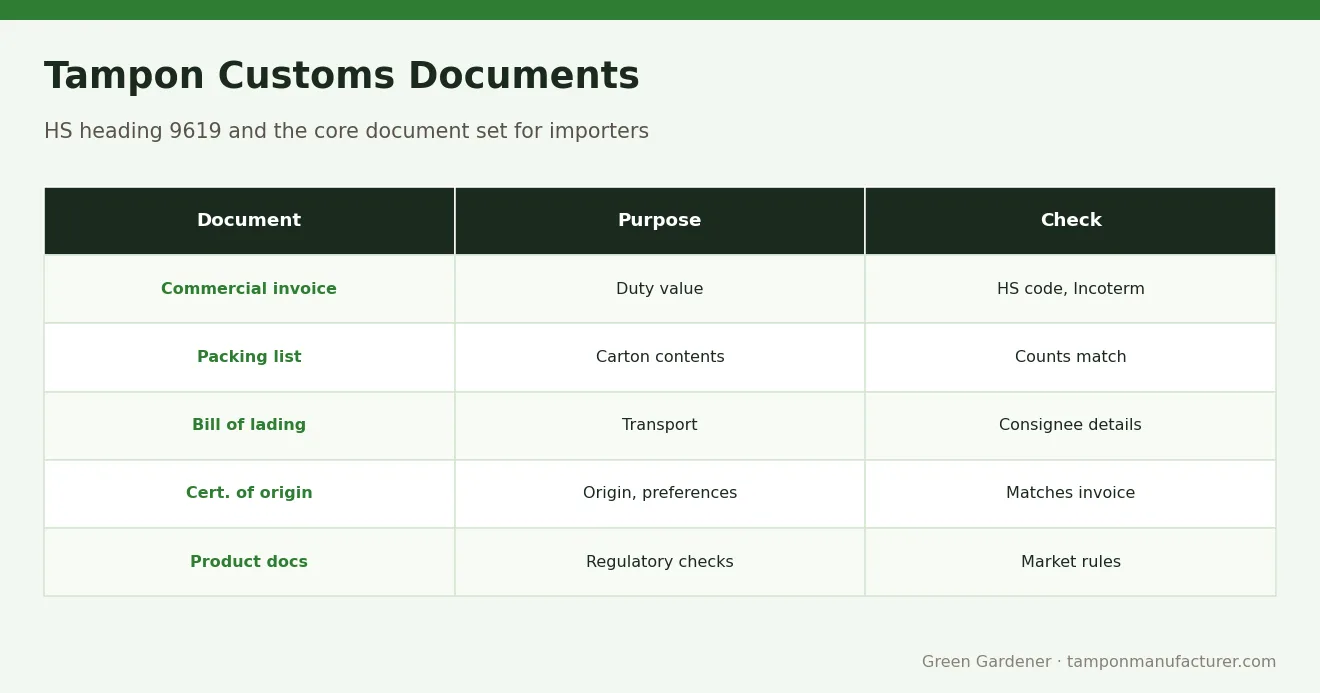
Most tampon shipments are cleared with a standard document set. Consistency between documents matters as much as the documents themselves.
| Document | Purpose | Key details |
|---|---|---|
| Commercial invoice | Basis for duty value | Seller, buyer, description, HS code, value, Incoterm |
| Packing list | Shows what is in each carton | Carton count, weights, dimensions, marks |
| Bill of lading or air waybill | Transport contract and title | Consignee, notify party, container or flight |
| Certificate of origin | Proves country of origin | Needed for preferences or on request |
| Product documentation | Regulatory checks | Test reports, labels, registrations as required |
Descriptions should be clear and specific, for example “cotton tampons with plastic applicator, individually wrapped, retail boxes”, rather than vague terms such as “hygiene goods”.
Values on the commercial invoice should reflect the real transaction price, including any packaging or tooling costs that customs rules treat as part of the value. Weights and carton counts on the packing list must match the transport document and the physical shipment. Keep copies of every document, the broker’s entry and proof of payment for the record-keeping period required in your country, because customs authorities can audit entries well after goods are released.
Certificates of Origin and Trade Agreements
A certificate of origin confirms where goods were manufactured. Non-preferential certificates are sometimes requested by banks under letters of credit or by importing authorities. Preferential certificates can reduce or remove duty where a trade agreement applies between China and the importing country, such as agreements with ASEAN members, Australia or partners under RCEP.
- Check whether a trade agreement covers your route and whether tampons qualify under its rules of origin.
- Agree before shipment which certificate type you need, as it must usually be issued around the export date.
- Make sure names, addresses and descriptions match the commercial invoice exactly.
Your broker or chamber of commerce can confirm the correct form for your destination.
Regulatory Checks Alongside Customs
Customs clearance is not only about duty. Tampons are regulated products in many markets, and border agencies may check that the product, labels and the companies involved meet local rules.
- United States – tampons are FDA-regulated medical devices, so entries are reviewed against FDA requirements; ocean shipments also need an Importer Security Filing before loading. See our guide to FDA requirements for importing tampons.
- European Union – importers need an EORI number, and packaging must meet EU rules including single-use plastics marking where applicable.
- Canada, Australia and the GCC – tampons are regulated; confirm requirements with Health Canada, the TGA or the SFDA as relevant.
Check current requirements for your market before the first shipment, not when goods are already at the port.
Common Mistakes That Cause Delays
Many clearance problems are avoidable with a final document check before the goods leave the factory:
- Different product descriptions or quantities on the invoice and packing list.
- Missing or inconsistent HS codes between documents and the entry.
- Consignee details that do not match the importer of record.
- Undervalued invoices, which can lead to penalties and seizures.
- Carton marks that do not match the packing list.
- Regulatory registrations not completed before arrival.
Our quality control documentation guide explains the product records that support both customs and retailer reviews.
For Brands: How We Prepare Export Documents
As a factory-direct manufacturer, we prepare commercial invoices and packing lists for every order and coordinate certificates of origin when you request them. Before shipment, we share draft documents for your broker to review so codes, descriptions and values are agreed in advance.
Tell us your destination country, importer of record and any trade agreement you plan to use, and we will confirm the document set in your quotation. Product documentation is provided on request. Explore our wholesale tampon supply for bulk and private label orders.
Request a Quote
Planning your first tampon import? Share your destination, volumes and preferred Incoterm, and we will confirm documentation and shipping terms in your quotation. Request a quote or contact us on WhatsApp at +86 173 1689 5054.
Frequently Asked Questions
What is the HS code for tampons?
Tampons fall under HS heading 9619, which covers sanitary towels (pads) and tampons, napkins and similar articles of any material. The six-digit subheading 9619.00 is shared internationally, but each country adds national digits. Confirm the full tariff code in the importing country’s current schedule or with your customs broker before shipping.
Are tampons and sanitary pads under the same HS code?
At the international six-digit level, tampons and pads are both covered by heading 9619. Many countries then separate products by type or material in their national subheadings, so tampons and pads may end up with different full codes and sometimes different duty rates. Your broker can confirm the correct national code.
Who is responsible for the correct HS code?
In most countries the importer of record is legally responsible for the classification and values declared to customs, even when a broker files the entry. Suppliers can suggest a code on the invoice, but importers should verify it against the current national tariff and keep records supporting their classification decision.
Do I need a certificate of origin for tampons?
Not always. A certificate of origin is needed when you claim reduced duty under a trade agreement, when a letter of credit requires it, or when the importing authority asks for one. Agree the certificate type before shipment, because it must match the invoice and is usually issued around the export date.
Does customs clearance cover regulatory approval?
No. Customs clearance deals with duty, taxes and border formalities, while product regulators check that the tampon itself, its labels and the companies involved meet local rules. In the US that means FDA requirements. In Canada, Australia and the GCC, confirm requirements with Health Canada, the TGA or the SFDA.
Request a Tampon or Pad Quote
Tell us the product, quantity and your market. We reply with options, pricing and sample steps. Prefer chat? WhatsApp +86 173 1689 5054.