
A first period kit is a small, reassuring bundle for someone starting their period: usually light or slim tampons, pads, panty liners, a discreet pouch and a simple guide. For brands, it is an entry product that builds trust early and works in retail, schools, subscriptions and gifting. Building one under private label means choosing age-appropriate products, keeping required labeling intact, and designing packaging that is friendly rather than clinical. We manufacture the core products and help assemble kits to your brief.
Why First Period Kits Matter for Brands
A first period is a moment many families plan for, and the products bought then often shape what someone uses for years. A well-designed starter kit gives a young user and their parent or carer a calm, complete solution in one box. For brands, that creates an early relationship and a natural path to full-size packs later.
Kits also travel well across channels. Retailers place them near teen care or gifting, schools and youth organizations include them in welcome programs, and subscription businesses use them as a first box. Because the kit combines several product types, it showcases your whole range in one purchase.
What Goes in a First Period Kit
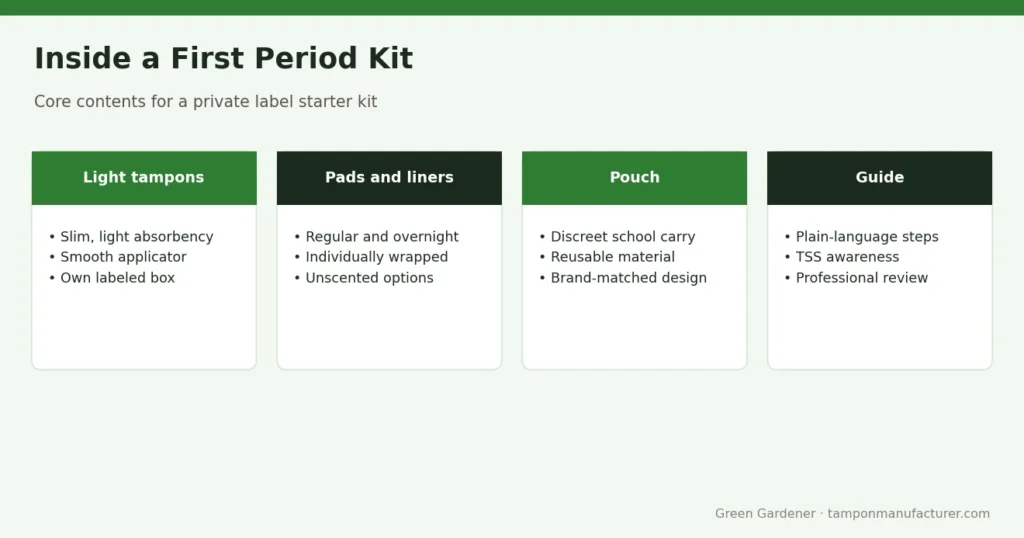
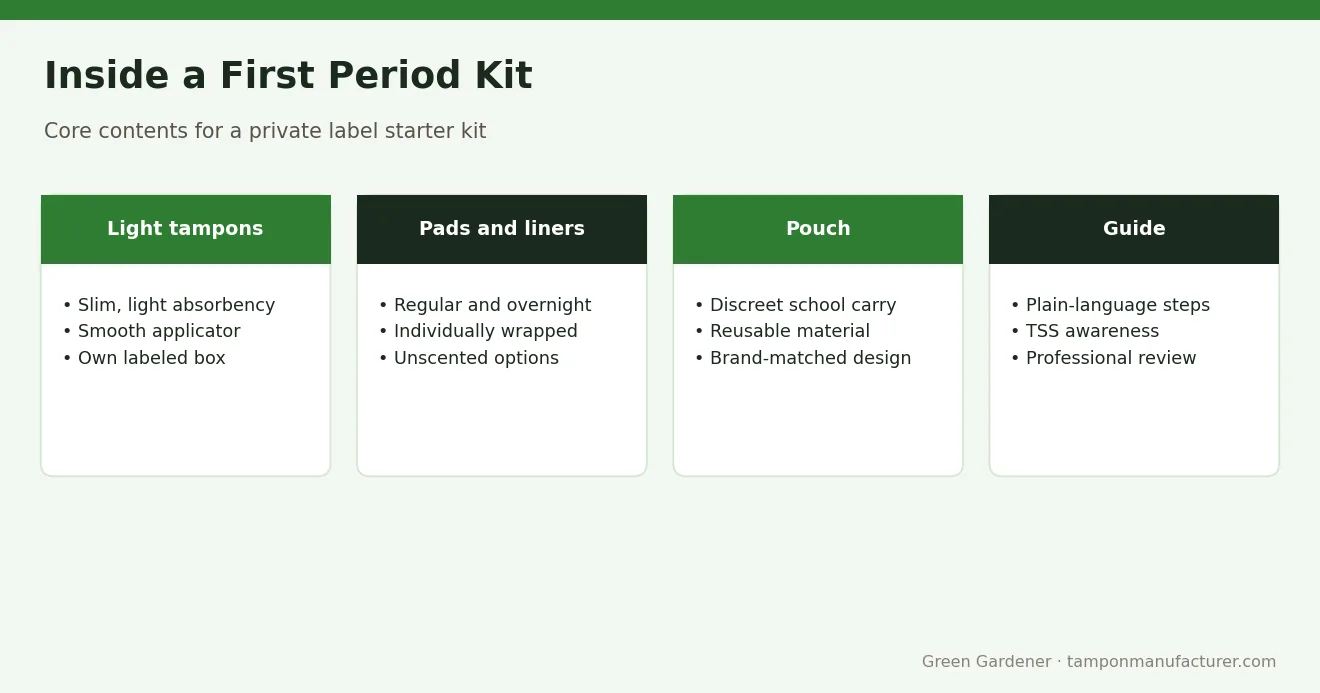
Most kits combine disposable products with a few comfort items. The table shows a typical structure that we can supply or assemble.
| Item | Purpose | Notes for brands |
|---|---|---|
| Light or slim tampons | Optional first tampon experience | Lowest absorbency; smooth applicator |
| Regular and overnight pads | Primary protection for most first-time users | Thin, soft cover; individually wrapped |
| Panty liners | Light days and spotting | Breathable, unscented options |
| Zip pouch or wallet | Discreet carry in a school bag | Fabric or recyclable material |
| Printed guide | Explains products and safe use | Plain language, reviewed text |
| Optional extras | Comfort and reassurance | Spare underwear, disposal bags, calendar card |
Many first-time users start with pads, so tampons are often included in small numbers as an option rather than as the main product.
Choosing Tampons for First-Time Users
When tampons are included, choose the lightest suitable absorbency and a smooth applicator. Our slim, mini and light tampons are designed for this use. Practical guidelines:
- Absorbency: Light, which under FDA labeling rules (21 CFR 801.430) means 6 g and under, measured with the syngina method.
- Applicator: plastic or compact plastic applicators with a rounded tip are often preferred for comfort; cardboard suits eco-focused lines.
- Size: a slim diameter can make first use easier.
- Packaging: keep tampons in their own labeled box with the package insert, rather than loose in the kit.
Our consumer article on tampons for teens and first-time users explains these choices from the user’s side. Kit materials should encourage users to follow package instructions and to talk to a parent, carer or doctor with any questions.
Pads and Liners: The Core of Most Kits
Pads remain the starting point for many young users, so their quality defines how the kit is remembered. Look for a soft cover, a thin but secure core, wings for movement and individual wrappers for school bags. Including a regular pad and a longer overnight pad covers day and night. Our sanitary pads and panty liners can be produced in the same visual style as your tampons, so the kit looks like one brand rather than a mix of suppliers.
Unscented products are a sensible default for a starter kit, keeping the ingredient story simple and avoiding added fragrance for new users.
Writing the Guide: Helpful, Not Medical
The printed guide is what makes a kit feel supportive. Keep it friendly and factual, and avoid giving medical advice. A typical guide covers:
- What a period is, in simple terms.
- How to use a pad and a liner, with simple illustrations.
- How to insert and remove a tampon, matching the package insert.
- Toxic shock syndrome (TSS) awareness, consistent with the tampon insert, and the advice to use the lowest absorbency needed.
- How to dispose of products responsibly.
- When to talk to a parent, carer, school nurse or doctor.
We recommend that a qualified healthcare professional reviews guide text before printing, and that it never contradicts the tampon package insert.
Packaging Design for a Starter Kit
Packaging should feel welcoming and discreet. Brands often choose soft colors, simple illustrations and a box that looks like a gift rather than a medical product. Practical considerations include a rigid or semi-rigid outer box that protects contents in transit, inner compartments that keep items tidy, a reusable pouch, and recyclable materials where possible. Print the contents list on the outer box so parents and retailers can see what is included. Think about how the box opens and in what order items appear: many brands place the guide on top, followed by the pouch, so the first impression is reassurance rather than a stack of products. A small age-neutral design also lets the same kit serve different markets. Our private label tampons service covers artwork, printing and kit assembly to your design.
Compliance Notes for Mixed-Product Kits
A kit combines products that may fall under different rules. The table summarizes points to check; confirm details with your regulatory advisor for each market.
| Component | United States | Other markets |
|---|---|---|
| Tampons | Medical devices; labeling under 21 CFR 801.430 with absorbency term and TSS information; check current FDA requirements | Regulated; confirm with Health Canada, TGA or SFDA as relevant |
| Pads and liners | Also regulated as medical devices; check current FDA requirements | Confirm local classification |
| Pouch, underwear, extras | General consumer products | Follow local product safety and labeling rules |
| Printed guide | Must not make unsupported claims | Translate accurately for each market |
Keep each regulated product in its own labeled unit pack so required information stays with it, and use lot codes on both product packs and the outer kit for traceability.
For Brands: Development Steps with Your OEM
We work through kit development in a clear sequence: confirm contents and counts, select tampon, pad and liner specifications, develop artwork for each unit pack and the outer box, then supply samples before bulk so you can check the full unboxing experience. With more than 15 years of experience, over 500 clients and a 52,000 m² factory, we can produce the core products under one roof and coordinate packaging. Quantities, pricing and timing are confirmed in your quotation.
Kit variants to consider
Many brands plan more than one version from the same core products. A retail gift kit focuses on presentation and a reusable pouch. An eco kit uses cardboard applicator tampons, paper-based wrappers and recyclable boxes. A school or community kit uses simple, neutral packaging so organizations can hand it out in larger numbers. A refill pack lets families restock pads, liners and light tampons once the first kit is used, turning a one-time purchase into a repeat customer. Sharing these plans early helps us standardize unit packs across versions and keep artwork costs under control.
Request a Quote
Planning a first period kit for retail, schools or subscriptions? Send your contents list, target markets and design ideas through our contact page or on WhatsApp at +86 173 1689 5054. We will recommend product specifications, arrange samples and confirm details in your quotation.
Frequently Asked Questions
What should a first period kit include?
A typical kit includes regular and overnight pads, panty liners, a small number of light or slim tampons, a discreet pouch and a simple printed guide. Some brands add spare underwear, disposal bags or a calendar card. Pads are usually the main product because many first-time users start with them.
Which tampons are best for a first period kit?
Light absorbency tampons with a slim profile and a smooth plastic or compact applicator are common choices. Under US labeling rules, Light means 6 g and under. Keep tampons in their own labeled box with the package insert, and encourage users to follow the instructions and ask a parent, carer or doctor with questions.
Do kits need special labeling for tampons?
Tampons keep their normal labeling requirements inside a kit. In the US, that includes the absorbency term and TSS information under 21 CFR 801.430, so it is simplest to include tampons in their own labeled unit pack with the insert. Other markets have their own rules, so confirm with your regulatory advisor.
Can you assemble complete kits, not just supply the products?
Yes. We manufacture tampons, pads and panty liners and can coordinate outer boxes, pouches and printed guides to your design for kit assembly. Samples of the full kit are provided before bulk production so you can check presentation and contents. Quantities, pricing and timing are confirmed in your quotation.
Who should review the guide included in a first period kit?
We recommend that a qualified healthcare professional reviews the guide text before printing. It should explain product use in plain language, match the tampon package insert, include TSS awareness and the lowest-absorbency advice, and tell readers when to speak to a parent, carer, school nurse or doctor, without giving medical advice.
Request a Tampon or Pad Quote
Tell us the product, quantity and your market. We reply with options, pricing and sample steps. Prefer chat? WhatsApp +86 173 1689 5054.