
Introduction
Tampons are available in different absorbency levels to match varying menstrual flow needs. Choosing the correct absorbency is important for comfort, safety, and effective protection.
Most tampon products are categorized into three main absorbency levels:
- Regular
- Super
- Super Plus
These levels indicate how much menstrual fluid the tampon can absorb. Manufacturers adjust the fiber density and weight of the absorbent core to create different absorbency options.
In this guide, we explain the differences between tampon absorbency levels and how manufacturers design products to meet different flow needs.
What Does Tampon Absorbency Mean?
Tampon absorbency refers to the amount of fluid a tampon can absorb before it needs to be changed. Absorbency levels are determined during the manufacturing process by adjusting:
- Fiber density
- Compression level
- Tampon weight
- Core structure
Higher absorbency tampons contain a larger or denser fiber core, allowing them to absorb more menstrual fluid.
Most tampon manufacturers follow standardized absorbency categories to help consumers choose the appropriate product.
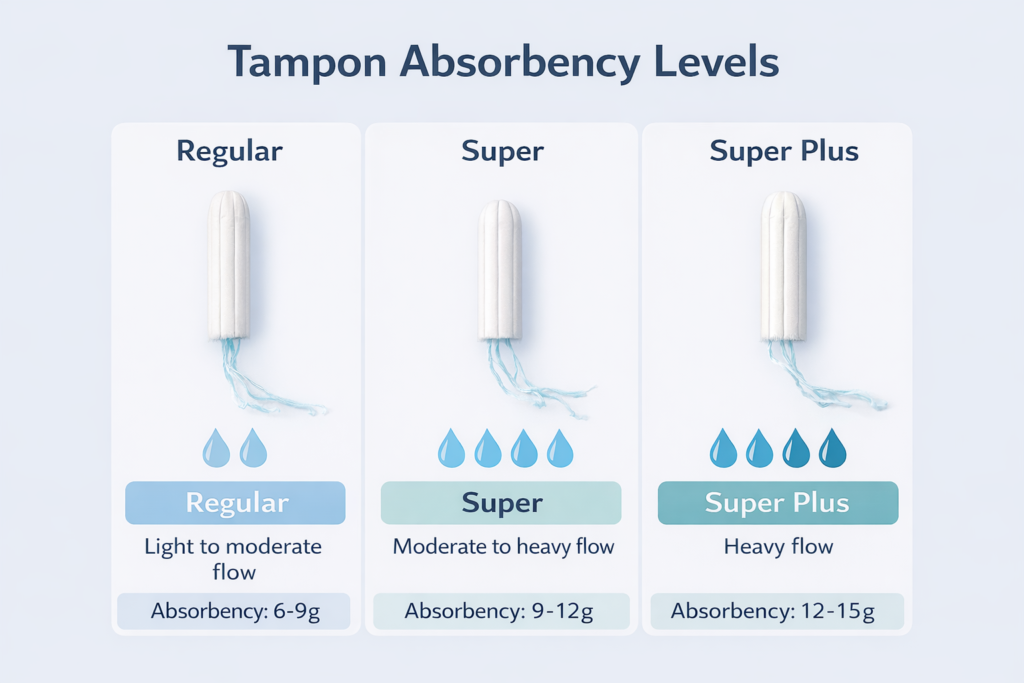
Regular Tampons
Absorbency Range
6–9 grams
Regular tampons are designed for light to moderate menstrual flow.
They are one of the most commonly used tampon types and are often recommended for the beginning or end of a menstrual cycle.
Advantages
Regular tampons offer several benefits:
- Comfortable for lighter flow days
- Smaller size for easier insertion
- Lower risk of over-absorption
Because of their versatility, regular tampons are widely included in most tampon product lines.
Super Tampons
Absorbency Range
9–12 grams
Super tampons are designed for moderate to heavy menstrual flow.
They contain a denser absorbent core compared to regular tampons, allowing them to absorb more fluid.
Advantages
Super tampons are useful for:
- Heavier flow days
- Longer protection between changes
- Improved leak protection
Many brands include super absorbency tampons as a core product in their lineup.
Super Plus Tampons
Absorbency Range
12–15 grams
Super Plus tampons are designed for heavy menstrual flow.
They have the highest absorbency among common tampon types and are typically used during peak flow days.
Advantages
Super Plus tampons provide:
- Maximum absorbency
- Extended protection
- Reduced risk of leakage during heavy flow
However, users should still follow recommended guidelines for changing tampons regularly.
How Manufacturers Create Different Absorbency Levels
Tampon manufacturers control absorbency through several production factors.
Fiber Materials
Most tampons are made from materials such as:
- Viscose rayon fibers
- Cotton fibers
- Cotton–viscose blends
These materials are selected for their high absorbency and softness.
Fiber Compression
Manufacturers adjust the compression of the fiber core to control how much fluid the tampon can absorb.
Higher compression levels typically create higher absorbency tampons.
Tampon Weight
The weight of the absorbent core also affects absorbency capacity.
For example:
| Absorbency Type | Weight Range |
|---|---|
| Regular | 6–9 g |
| Super | 9–12 g |
| Super Plus | 12–15 g |
Choosing the Right Absorbency Level
Selecting the appropriate tampon absorbency depends on menstrual flow and personal preference.
General guidelines include:
- Regular for light to moderate flow
- Super for moderate to heavy flow
- Super Plus for heavy flow days
Using the correct absorbency level helps ensure comfort while reducing the risk of leaks.
Tampon Absorbency Options in Private Label Manufacturing
Professional tampon manufacturers typically offer multiple absorbency options for private label products.
Common customization options include:
- Regular absorbency (6–9g)
- Super absorbency (9–12g)
- Super Plus absorbency (12–15g)
Manufacturers can also provide:
- Custom tampon materials
- Applicator options
- Private label packaging
- Custom branding for retail markets
This flexibility allows brands and distributors to create product lines that match consumer demand.
Conclusion
Tampon absorbency levels—Regular, Super, and Super Plus—are designed to meet different menstrual flow needs. Each level offers a different absorption capacity, achieved through variations in fiber density, material composition, and tampon weight.
Understanding absorbency levels helps consumers choose the right product while allowing brands to develop product lines suited to different markets.
For companies looking to develop feminine hygiene products, working with an experienced tampon manufacturer ensures reliable absorbency performance and customizable product options.