Launching a private label feminine hygiene brand is not only a branding exercise. It is a product, sourcing, packaging, compliance, and distribution project that needs to be planned in the right order. Many new brands focus heavily on logo design and social media before they have confirmed product structure, supplier capability, packaging requirements, or launch economics. That usually leads to delays, avoidable costs, and weaker market entry.
For tampon-focused brands, the smartest approach is to treat launch as a commercial system. You need a clear product position, a realistic OEM partner, manageable MOQ planning, packaging that fits the market, and a launch path that matches your sales channel.
1. Start With a Focused Market Position
Do not begin by trying to sell to everyone. The feminine hygiene category is broad, and new brands rarely win by copying large incumbents on price or shelf scale.
Instead, define where your brand will be most relevant. Common positioning directions include:
- organic or natural-material products
- eco-focused packaging and sustainability claims
- minimalist or premium personal-care branding
- youth-oriented or first-period education positioning
- e-commerce-first convenience and subscription logic
- region-specific distribution opportunities
A narrower market position helps you make better decisions on product type, packaging, MOQ, messaging, and price architecture.
2. Choose a Product Range You Can Actually Launch
Many startup brands make the mistake of planning too many SKUs too early. A stronger launch usually starts with a limited product range that is operationally manageable.
For example, before expanding into a full feminine care line, many brands begin with:
- one tampon format
- one or two absorbency levels
- one packaging structure
- one core sales channel
This reduces complexity in production, packaging development, compliance review, and inventory planning. It also helps you test actual demand before expanding.
3. Build the Brand Around Real Product Decisions
Brand strategy is not separate from operations. If your positioning is premium, eco-friendly, or convenience-led, the product and packaging system need to support that promise.
Key product decisions may include:
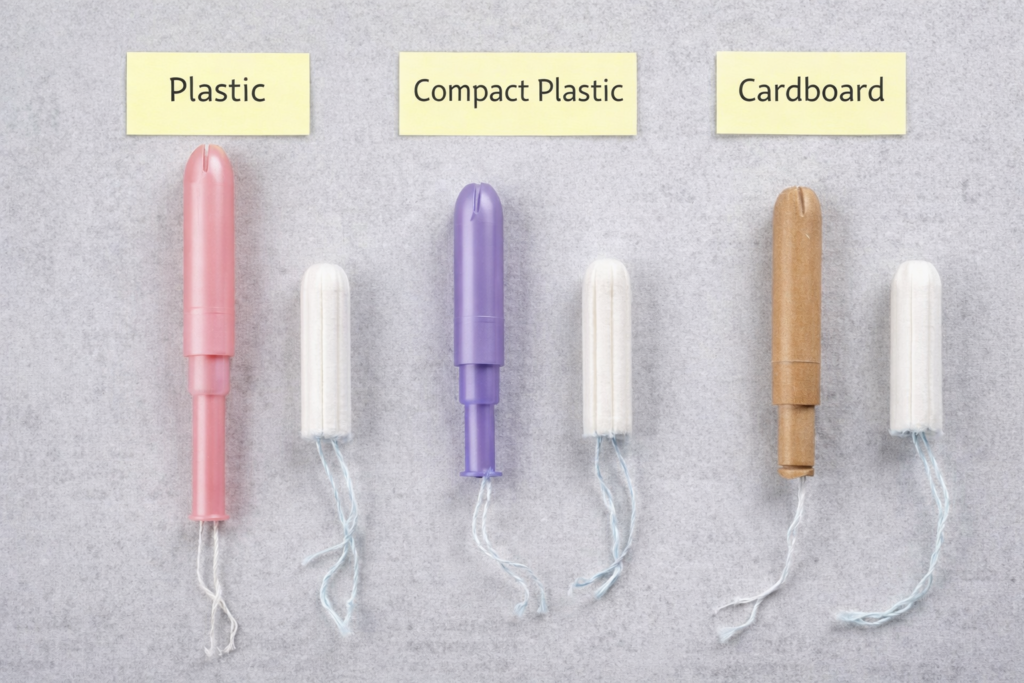
- applicator or non-applicator design
- cotton, rayon, or blended material direction
- regular-only launch or multi-absorbency launch
- wrapper and retail box style
- sustainability or material-story emphasis
This is where brand owners often realize that product structure affects cost, MOQ, and lead time more than expected. If you want to sell under your own label, you need a factory partner that can support both product execution and packaging coordination.
4. Select an OEM Partner Carefully
Your brand will only be as reliable as the manufacturer behind it. A good supplier does more than make samples. It should be able to explain production capability, packaging workflow, quality control, and project coordination in practical terms.
When evaluating an OEM partner, review:
- production capability and product scope
- packaging customization support
- MOQ flexibility for early-stage launches
- communication quality during technical discussions
- quality-control process and traceability logic
- export experience for your target market
If you are comparing factories, review our page on private label tampons and our broader guide to private label tampons.
5. Plan Compliance and Documentation Early
Private label feminine hygiene products may face market-specific documentation, labeling, and regulatory expectations depending on where you plan to sell. That is why compliance planning should begin early rather than after packaging is finished.
Brand owners should confirm:
- what product documentation may be needed for the target market
- what packaging information must be included
- who is responsible for final label approval
- what batch records and QC support the factory can provide
- whether claims on packaging are supportable and appropriate
The exact requirements vary by market, so brands should align internal review, importer requirements, and factory support before mass production.
6. Treat Packaging as a Commercial Tool, Not Just Design
In feminine hygiene products, packaging affects trust, compliance, logistics, and margin. It is not just a visual brand asset.
During launch planning, confirm:
- individual wrapper format
- retail box structure
- case pack and shipping carton details
- barcode and shipping mark setup
- multilingual packaging needs if exporting
- warning and usage information placement
Packaging choices can increase or reduce both MOQ and cost. For more detail, see our guide to custom tampon packaging.
7. Match the Launch Plan to Your Sales Channel
Your brand structure should reflect where you plan to sell.
For example:
- direct-to-consumer brands need packaging that works for shipping and repeat purchase
- retail-focused brands need stronger shelf presentation and pack clarity
- distributor-led brands need bulk packaging logic and clearer margin planning
- cross-border projects need stronger documentation and export coordination
When product format, packaging, and sales channel are aligned early, launch execution becomes more efficient.
8. Build a Realistic Sample-to-Launch Timeline
One of the biggest mistakes new brands make is underestimating how long product launch actually takes. Sampling, packaging approval, revisions, and production scheduling all take time.
A realistic launch timeline often includes:
- product requirement confirmation
- supplier discussion and quotation review
- sample development and testing
- packaging design and revision
- documentation and compliance review
- mass production scheduling
- shipping and channel setup
The timeline varies by project, but buyers should assume that packaging and approvals often take longer than expected. A factory that communicates clearly about lead time is usually a stronger long-term partner.
9. Control Risk by Starting With a Manageable First Order
A private label launch should prove the model before it tries to maximize scale. Brands that overbuild the first order often create cash-flow pressure and inventory risk.
A stronger first-order strategy usually focuses on:
- limited SKU count
- realistic MOQ acceptance
- packaging that is differentiated but not overcomplicated
- sales-channel readiness before goods arrive
- clear reorder logic if the first launch performs well
This improves inventory discipline and protects working capital during early growth.
10. Know the Most Common Launch Mistakes
The same problems appear in many new private label brand projects:
- choosing a brand concept before validating product economics
- trying to launch too many SKUs at once
- selecting a supplier based only on price
- leaving packaging compliance to the last stage
- assuming the first sample guarantees stable mass production
- underestimating lead time for custom packaging
- building inventory before demand channels are ready
Avoiding these mistakes can improve both launch speed and gross-margin stability.
What a Good Launch Checklist Should Include
Before you commit to production, make sure you have answers to these questions:
- What is the brand position and target customer?
- Which product type and absorbency range will launch first?
- Which OEM partner will support the project and why?
- What is the MOQ and cost structure?
- What packaging format is approved?
- What documentation and labeling work is still pending?
- Which channel will sell the first order?
- What is the reorder plan if launch demand is strong?
This checklist helps turn a brand idea into an executable launch plan.
Final Thoughts
Starting a private label feminine hygiene brand requires more than a good idea. It requires coordination across product positioning, OEM sourcing, packaging, compliance planning, and commercial execution. The brands that launch more effectively are usually the ones that simplify early decisions, control complexity, and work with manufacturers that can support both production and project communication.
If you are preparing to launch a tampon-focused private label brand, start with a clear product scope and a realistic supplier discussion. You can review our guide to start your own tampon brand, explore custom tampon packaging, or contact us to discuss your project.
Optional CTA Block
Planning to launch a private label feminine hygiene brand?
Talk to our team about product positioning, MOQ, packaging options, OEM manufacturing, and launch planning. For project discussions, contact us.
FAQ Section
What is the best way to start a private label feminine hygiene brand?
Start with a focused market position, a limited product range, and a clear OEM sourcing plan. Brands usually perform better when they simplify the first launch instead of trying to launch too many SKUs at once.
How many products should a new feminine hygiene brand launch with?
In many cases, one core product format with one or two absorbency levels is a more manageable starting point than a full product catalog. This helps control MOQ, packaging complexity, and inventory risk.
Why is OEM partner selection so important for private label brands?
The OEM partner affects product quality, packaging execution, lead time, documentation support, and long-term scalability. A weak supplier can create delays and brand risk even if the product idea is strong.
Does custom packaging increase MOQ and cost?
Usually yes. Higher packaging customization often increases setup complexity, MOQ, and unit cost. Brands should balance differentiation with launch-stage budget control.