
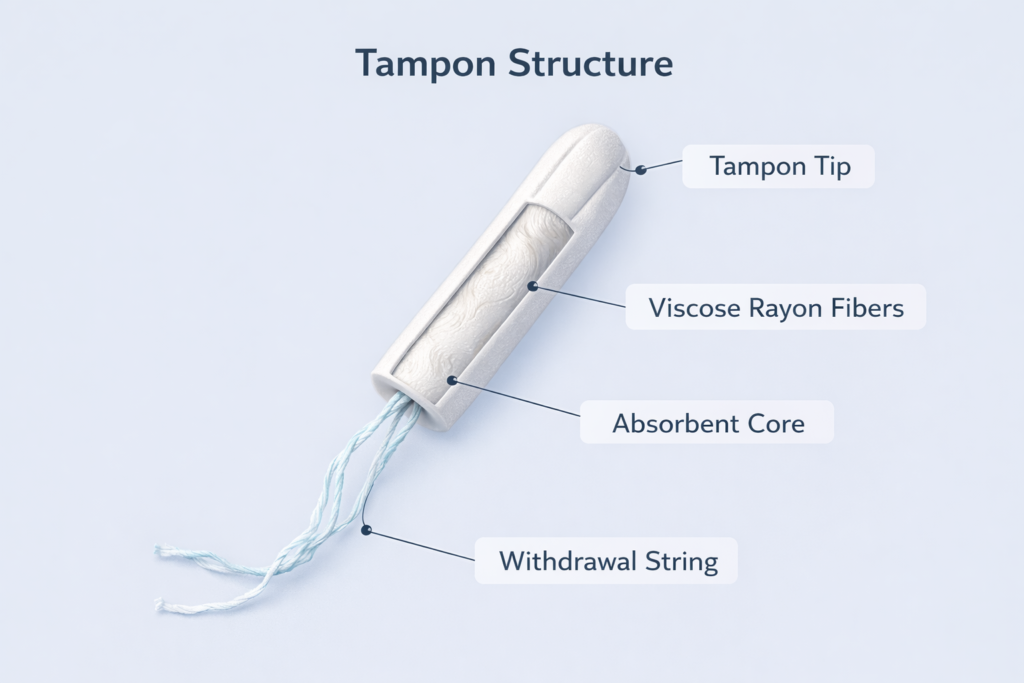
When comparing tampon products, one of the most important distinctions is whether the tampon comes with an applicator. Both applicator and non-applicator tampons serve the same basic purpose, but they differ in insertion method, packaging, cost structure, and consumer preference.
For consumers, the difference affects comfort and convenience. For brands, distributors, and private label buyers, it affects manufacturing complexity, shipping efficiency, and market fit. That is why understanding this product difference is important when working with a professional tampon manufacturer.
What Are Applicator Tampons?
Applicator tampons include a tube that helps guide the tampon into place. The applicator may be made from plastic, cardboard, or plant-based materials, depending on the market and brand positioning.
Applicator tampons are commonly associated with:
- easier insertion
- beginner-friendly positioning
- a more premium user experience
- Higher packaging and material usage
In many English-speaking markets, especially the United States, applicator tampons remain the dominant format.
What Are Non-Applicator Tampons?
Non-applicator tampons do not include a tube. The tampon is inserted manually, which makes the product smaller and more compact.
Non-applicator tampons are commonly associated with:
- simpler product structure
- lower unit cost
- smaller packaging size
- less material waste
- strong demand in Europe
Because they require less packaging and fewer components, non-applicator tampons are often attractive for cost-sensitive and sustainability-focused product lines.
Main Difference at a Glance
| Feature | Applicator Tampons | Non-Applicator Tampons |
|---|---|---|
| Insertion | Tube-assisted | Manual |
| User Experience | Often easier for beginners | Often preferred by experienced users |
| Packaging Size | Larger | More compact |
| Material Usage | Higher | Lower |
| Shipping Efficiency | Lower | Higher |
| Sustainability Positioning | Depends on applicator material | Often stronger due to less waste |
| Common Markets | US, Canada, Australia | UK, Germany, France, Nordics |
Which Type Is Easier to Use?
For many first-time users, applicator tampons are easier because the tube helps position the product with less direct contact. This is why many beginner-oriented product lines favor compact or smooth-tip applicator formats.
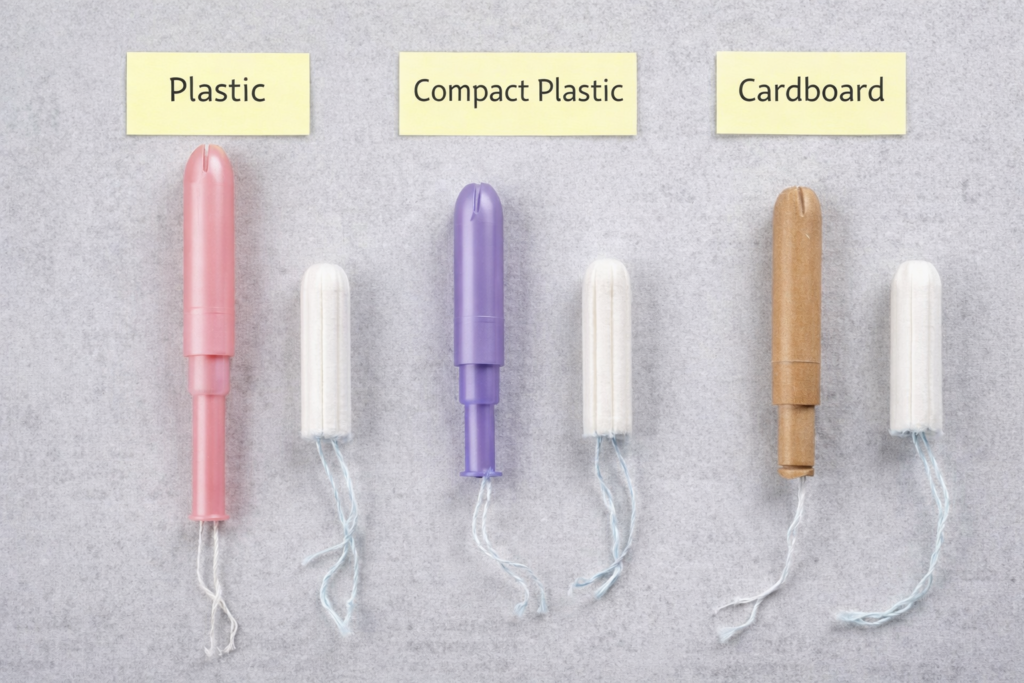
Non-applicator tampons can also be easy to use, but they usually appeal more to consumers who are already familiar with tampons and want a smaller, simpler product.
Cost and Manufacturing Differences
From a manufacturing perspective, applicator tampons usually require:
- more components
- more assembly steps
- more complex production equipment
- larger packaging and shipping volume
Non-applicator tampons usually offer:
- fewer raw materials
- simpler production flow
- better carton efficiency
- lower shipping cost per unit
For this reason, a tampon factory may recommend different formats depending on your target market, MOQ expectations, and price positioning.
Sustainability Considerations
Sustainability has become a major buying factor in feminine care. Non-applicator tampons naturally use less material, but applicator products can also move toward more sustainable positioning when brands choose:
- cardboard applicators
- plant-based applicators
- recyclable outer cartons
- organic cotton cores
If sustainability is a key part of your brand message, you may also want to review organic vs conventional tampons.
Which Format Is Better for Your Market?
There is no universal winner. The right choice depends on who you are selling to.
Applicator tampons are often a better fit if:
- You target North America or Australia
- Your brand emphasizes convenience and comfort
- You want a beginner-friendly product line
- You are building a premium retail presentation
Non-applicator tampons are often a better fit if:
- You target Europe
- You want compact packaging
- You want lower shipping and production costs
- Sustainability is a core selling point
Some brands launch both formats to reach different customer segments.
What Buyers Should Ask a Manufacturer
Before selecting either format, ask your tampon manufacturer the following:
- Do you produce both applicator and non-applicator tampons?
- What applicator materials do you support?
- What are the MOQ differences between the two formats?
- How do packaging sizes affect shipping costs?
- Can you support OEM tampons and private label packaging for both lines?
You can also review our guide on how to choose the right tampon manufacturer before starting a project.
Final Thoughts
The difference between applicator and non-applicator tampons goes far beyond insertion style. It affects user experience, sustainability positioning, packaging, unit economics, and regional demand.
For brands, distributors, and sourcing teams, choosing the right format is a strategic product decision. If you are evaluating formats for wholesale or private label tampons, a capable tampon manufacturer can help you match product design to your target market. To discuss product options, MOQ, and packaging solutions, contact us.
Frequently Asked Questions
What is the main difference between applicator and non-applicator tampons?
The main difference is the insertion method. Applicator tampons use a tube to help place the tampon, while non-applicator tampons are inserted manually. This also affects packaging size, material use, and market preference.
Are applicator tampons better for beginners?
For many first-time users, applicator tampons are often easier because the applicator helps guide the tampon into position with less direct contact. That is why they are commonly preferred in beginner-oriented product lines.
Are non-applicator tampons more sustainable?
They can be, because they usually use less material and require more compact packaging. This may reduce packaging waste and improve shipping efficiency compared with applicator formats.
Which markets prefer non-applicator tampons?
Non-applicator tampons are often more common in many European markets, where compact size, lower material use, and portability are valued.