

Compression technology is one of the most important and least understood parts of tampon production. It sits at the point where prepared absorbent fiber is transformed into a stable final product. A tampon that is not compressed correctly may still look acceptable on the outside, but it can perform inconsistently in absorbency, insertion comfort, and expansion behavior.

That is why compression control is a core capability inside any serious tampon manufacturer’s operation. It directly affects product performance and is central to how factories develop multiple product specifications for global markets.
What Is Tampon Compression Technology?
Tampon compression technology refers to the manufacturing process that applies controlled pressure to a prepared absorbent core to create the final tampon form.
This process helps define:
- product density
- dimensional stability
- physical firmness
- absorbency behavior
- expansion pattern during use
Compression is not only about making the product smaller or firmer. It is about building the right structure for the intended product performance.
Why Compression Matters
If compression is too weak, the product may lack structural stability. If compression is too strong or inconsistent, it may affect comfort, absorption behavior, or expansion balance.
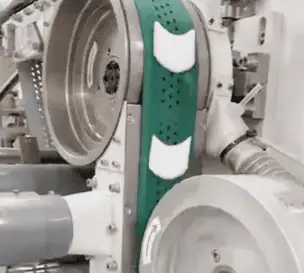
A properly controlled compression process helps support:
- uniform tampon shape
- better product consistency
- controlled absorbency classification
- smoother insertion feel
- stable performance across batches
This is one reason why compression settings are treated as a technical parameter rather than a simple mechanical step.
1. Relationship Between Compression and Fiber Structure
Compression does not act alone. Its results depend heavily on the absorbent fiber that enters the process.
The outcome can vary based on:
- fiber type
- fiber alignment
- moisture condition
- blend ratio
- preparation consistency
This means compression technology must be matched to the material system rather than applied as a one-size-fits-all setting.
2. Compression and Absorbency Levels
Different tampon absorbency levels require different product structures. Compression influences how much material is packed into the final form and how the core behaves when exposed to fluid.
This affects:
- absorbency range accuracy
- product density by SKU
- product-to-product repeatability
- labeling reliability
Factories that produce multiple absorbency levels must manage compression carefully to maintain clear separation between specifications.
3. Compression and Expansion Behavior
Compression also affects how tampons expand during use. The way the fiber mass is compacted influences how it opens when fluid is absorbed.
This can affect:
- product fit
- comfort perception
- fluid distribution
- leakage control performance
That is why compression is closely connected to product development and user experience, not just factory efficiency.
4. Equipment Control in Compression Systems
Modern tampon lines use shaping and compression equipment designed to apply repeatable pressure under controlled settings.
A well-managed compression system helps the factory maintain:
- consistent force application
- stable dimensions
- reduced variation between runs
- Improved compatibility with different SKUs
In more advanced lines, compression performance is supported by automation and in-process monitoring.
5. Compression as a Quality Variable
A professional tampon factory treats compression as a controlled quality variable. It is usually linked with:
- product development parameters
- absorbency validation
- dimensional inspection
- batch consistency review
- troubleshooting when performance issues occur
If a factory cannot explain how compression is managed, it may not fully understand its own product behavior.
6. Why Compression Technology Matters for OEM Buyers
For OEM tampon manufacturing, compression technology matters because different brands may request different combinations of:
- absorbency levels
- material systems
- product feel
- packaging formats
- target-market positioning
Compression control helps translate these commercial requirements into a real, manufacturable product specification.
Questions to Ask a Manufacturer About Compression
If you are evaluating a factory, ask:
- How do you maintain consistent compression on your line?
- Does compression vary across absorbency levels?
- How do material changes affect compression settings?
- How do you verify that compression supports product performance?
- Can you support development across multiple tampon specifications?
These questions are especially useful when comparing manufacturers with different technical depth.
Final Thoughts
Tampon compression technology is one of the key engineering elements behind product performance. It influences density, absorbency, comfort, and expansion behavior, making it essential to both factory control and end-user experience.
For buyers and brand owners, understanding compression helps assess whether a supplier has true manufacturing knowledge or only surface-level product-sales language. A technically capable tampon manufacturer should be able to explain compression clearly, connect it to product outcomes, and support specification development for OEM or private label projects. For technical discussions or sample development, contact our team.