
Introduction
Quality control is one of the most critical aspects of tampon manufacturing. Because tampons are personal hygiene products used internally, manufacturers must ensure that every product meets strict safety, hygiene, and performance standards.
Professional tampon manufacturers implement comprehensive quality control systems throughout the entire production process—from raw material inspection to final product testing.
In this article, we explain how tampon manufacturers maintain product safety and reliability through strict quality control procedures.
Importance of Quality Control in Tampon Production
Tampons must meet high safety and hygiene standards to ensure consumer health and comfort.
Without proper quality control, problems such as inconsistent absorbency, weak withdrawal strings, or contamination could occur.
Quality control helps manufacturers ensure:
- consistent absorbency performance
- safe and hygienic production
- strong product reliability
- compliance with manufacturing standards
These measures help protect consumers while maintaining brand reputation.
Raw Material Inspection
Quality control begins before the manufacturing process starts.
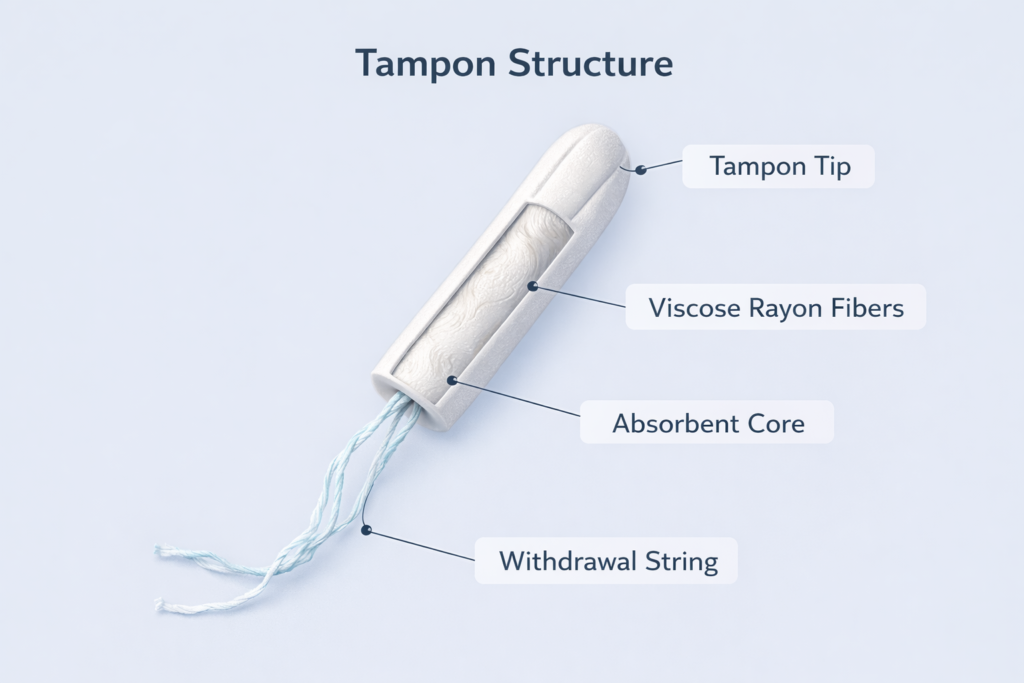
Tampon manufacturers carefully inspect all raw materials, including:
- viscose rayon fibers
- cotton or organic cotton fibers
- withdrawal strings
- applicator materials
- packaging materials
Raw materials must meet strict quality standards before they are approved for production.
Inspecting materials at this stage helps prevent defects later in the manufacturing process.
Production Line Monitoring
During the manufacturing process, production lines are continuously monitored to ensure product consistency.
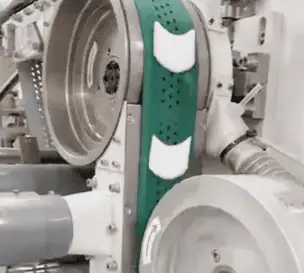
Automated systems check multiple parameters such as:
- fiber compression levels
- tampon weight and density
- string attachment accuracy
- applicator assembly alignment
Production monitoring helps detect potential issues early and maintain stable product quality.
Absorbency Testing
Absorbency testing is one of the most important quality checks for tampon products.
Manufacturers test tampons to ensure they absorb fluid effectively and expand properly during use.
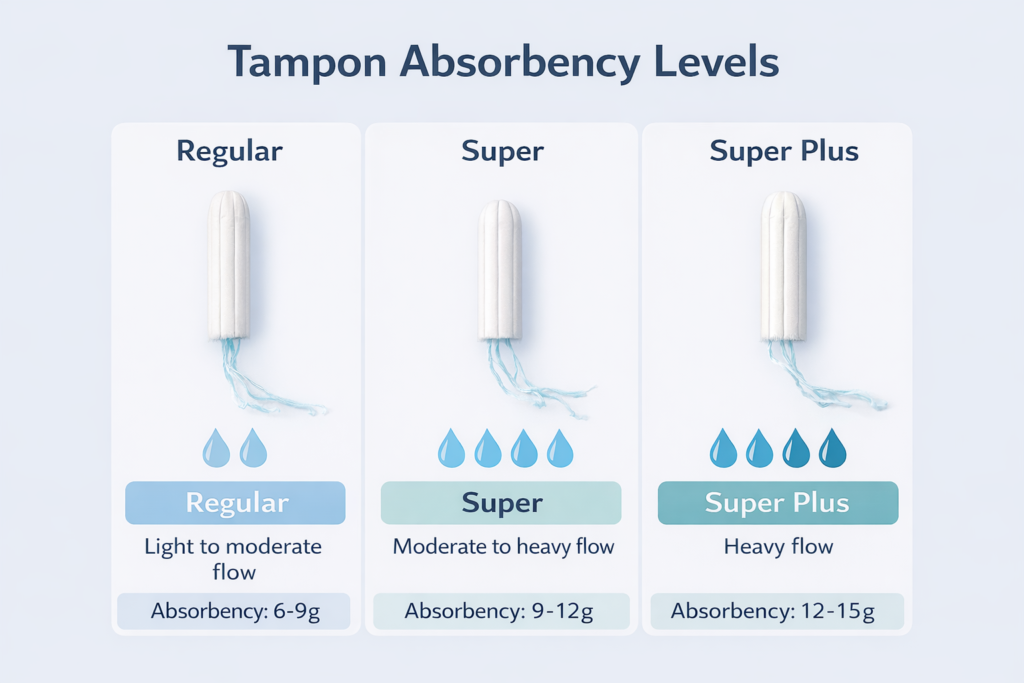
Tampons are typically categorized into several absorbency levels:
| Absorbency Type | Typical Range |
|---|---|
| Regular | 6–9 g |
| Super | 9–12 g |
| Super Plus | 12–15 g |
Quality testing ensures each tampon performs according to its specified absorbency level.
Withdrawal String Strength Testing
The withdrawal string is a critical safety component of a tampon.
Manufacturers perform pull-strength tests to ensure the string remains securely attached during removal.
These tests verify that the string can withstand the force required for safe removal without detaching from the tampon core.
Hygiene and Microbiological Testing
Hygiene standards are essential in the production of feminine hygiene products.
Manufacturers perform microbiological testing to ensure the product is free from harmful contamination.
Production environments are also maintained under strict hygiene conditions to reduce the risk of contamination during manufacturing.
Final Product Inspection
Before tampons are packaged and shipped, the finished products undergo final inspections.
Quality control teams check:
- product dimensions
- packaging integrity
- labeling accuracy
- overall product appearance
Only products that pass all quality checks are approved for shipment.
Quality Control and Private Label Manufacturing
For companies launching private label tampon products, quality control is especially important.
Reliable tampon manufacturers provide strict quality control procedures to ensure consistent product performance across large production volumes.
These procedures help brands maintain product safety and build trust with consumers.
Conclusion
Quality control is essential in tampon manufacturing to ensure product safety, reliability, and consistent absorbency performance.
From raw material inspection to final product testing, professional tampon manufacturers implement strict quality management systems to maintain high standards.
For brands entering the feminine hygiene market, partnering with an experienced manufacturer with strong quality control procedures is key to producing reliable private label tampon products.