
Introduction
Modern tampon production relies on highly automated manufacturing systems designed to produce safe, hygienic, and consistent products at large scale.
A tampon production line integrates multiple processes including fiber preparation, compression, assembly, packaging, and quality inspection. These processes are carefully controlled to ensure product reliability and efficiency.
In this article, we explain how a modern tampon production line works, the key machines involved, and how manufacturers maintain consistent product quality.
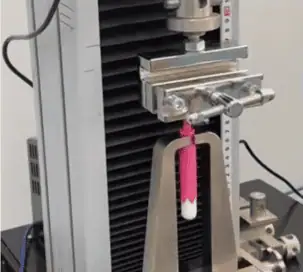
Overview of a Tampon Production Line
A tampon production line is a specialized manufacturing system that converts raw absorbent fibers into finished tampon products.
The production line typically includes several integrated stages:
- fiber preparation
- tampon core formation
- string attachment
- shaping and compression
- applicator assembly
- packaging
- quality inspection
These stages operate continuously using automated equipment designed for high production efficiency.
Fiber Preparation System
The first stage of the production line involves preparing the absorbent fibers.
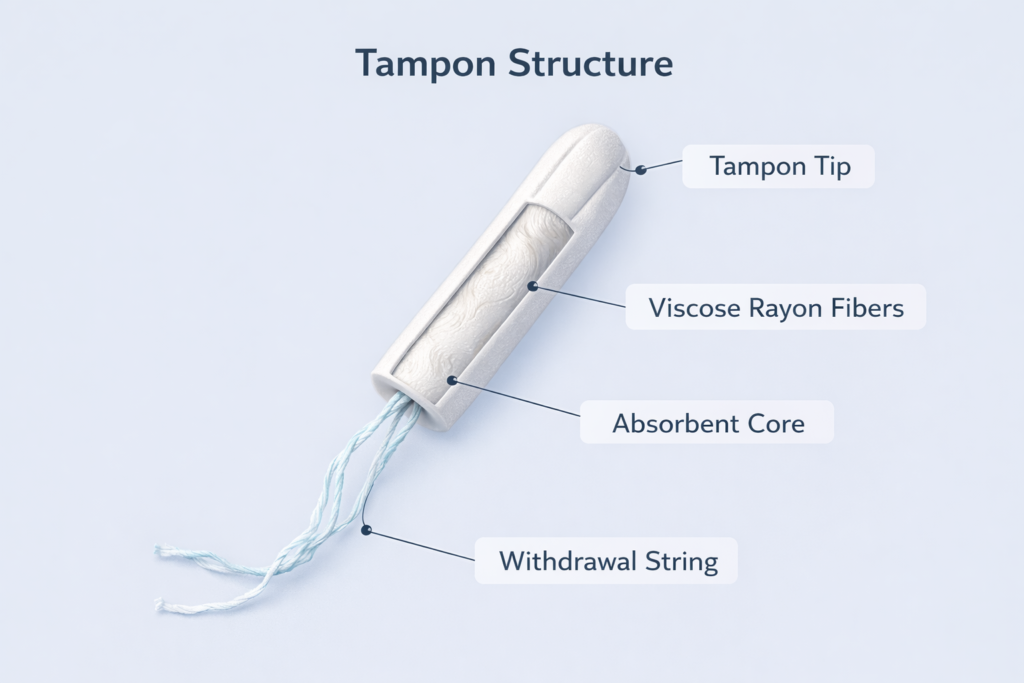
Manufacturers typically use materials such as:
- viscose rayon fibers
- cotton fibers
- organic cotton
The fibers are cleaned, separated, and aligned to form a uniform fiber layer. This preparation step ensures that the tampon core will have consistent absorbency.
Advanced fiber preparation machines help control the structure and density of the fibers before compression.
Tampon Core Forming Machine
After fiber preparation, the fibers move into the core forming system.
Specialized machines compress the fibers into cylindrical shapes that form the tampon core.
During this stage, manufacturers control several parameters:
- tampon weight
- fiber density
- compression pressure
These factors determine the absorbency level of the final product.
String Attachment System
Once the tampon core is formed, a withdrawal string is attached.
Automated machines secure the string to the tampon core using a precise attachment process.
Quality control systems check the strength and positioning of the string to ensure safe removal during use.
Applicator Assembly Equipment
Some tampon products include applicators to help users insert the tampon more easily.
Production lines may include machines that assemble:
- plastic applicators
- compact plastic applicators
- cardboard applicators
The tampon core is inserted into the applicator tube, and the plunger mechanism is assembled.
Packaging Line
After assembly, tampons move to the packaging stage.
Packaging machines perform several tasks, including:
- individual tampon wrapping
- grouping tampons into retail packs
- carton packaging for shipment
Automated packaging systems help maintain hygiene while improving production efficiency.
Quality Inspection Systems
Modern tampon production lines include integrated quality inspection systems.
These systems monitor several parameters during production:
- tampon weight
- compression consistency
- string attachment strength
- packaging integrity
Advanced inspection equipment helps detect defects and maintain consistent product quality.
Advantages of Automated Tampon Production
Automated production lines offer several benefits for tampon manufacturers.
These advantages include:
- higher production efficiency
- consistent product quality
- reduced labor costs
- improved hygiene standards
Automation also allows manufacturers to produce large volumes of tampons while maintaining strict quality control.
Private Label Tampon Production
Many brands partner with professional tampon manufacturers that operate advanced production lines.
These manufacturers provide private label production services, allowing companies to develop their own branded tampon products.
Private label services may include:
- customized absorbency levels
- applicator options
- organic cotton tampons
- custom packaging design
This approach allows brands to enter the feminine hygiene market without building their own factories.
Conclusion
Modern tampon production lines combine advanced machinery, automated systems, and strict quality control procedures to produce safe and reliable products.
From fiber preparation to packaging, each stage of the production line is carefully designed to ensure consistent absorbency, hygiene, and performance.
For brands interested in launching feminine hygiene products, partnering with an experienced tampon manufacturer with advanced production capabilities can provide reliable and efficient manufacturing support.