
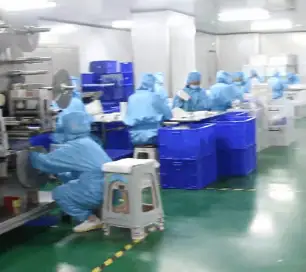
Understanding the tampon manufacturing process is essential for distributors, private label brands, and importers who want to ensure product quality, safety, and regulatory compliance.
Tampons are classified as medical-grade hygiene products in many countries. Therefore, strict quality control, sterile production environments, and certified raw materials are required.
If you are sourcing from a professional tampon manufacturer, this guide explains how tampons are made—from raw material selection to final packaging.
Step 1: Raw Material Selection
High-quality tampon production begins with safe and certified raw materials.
The absorbent core typically uses:
- Medical-grade cotton
- Rayon fiber
- Organic certified cotton (for premium products)
Manufacturers must ensure:
- No harmful chemical residues
- No chlorine bleaching (for organic lines)
- Stable fiber absorbency
- Consistent material density
Raw material testing includes:
- Fiber purity testing
- Microbiological analysis
- Moisture control checks
A reliable OEM tampon factory maintains strict supplier audits to guarantee material consistency.
Step 2: Fiber Blending & Preparation
Once materials are approved, fibers are blended to achieve consistent absorbency and expansion performance.
This stage includes:
- Controlled fiber mixing
- Humidity regulation
- Dust removal systems
- Anti-contamination monitoring
Proper blending ensures:
- Even absorption
- Comfortable expansion
- Reduced leakage risk
Advanced tampon manufacturers use automated systems to maintain precision during this process.
Step 3: Core Forming & Compression
The blended fiber is then shaped into tampon cores.
This stage includes:
- Fiber feeding into forming machines
- Compression into cylindrical shape
- Density calibration
- Dimensional accuracy checks
Compression is critical because it determines:
- Expansion consistency
- Absorbency performance
- Comfort during insertion
Absorbency levels (Light, Regular, Super, Super Plus) are controlled by adjusting fiber volume and density.
Step 4: String Attachment
Each tampon must have a securely attached withdrawal string.
Quality control at this stage includes:
- Tensile strength testing
- Knot security inspection
- Attachment position accuracy
International standards require string strength to meet strict pull-force requirements to ensure safety.
Step 5: Applicator Assembly (For Applicator Tampons)
For applicator tampons, an additional process is required.
This stage includes:
- Applicator tube production (plastic or cardboard)
- Smooth surface finishing
- Core insertion into applicator
- Alignment testing
Proper applicator alignment ensures comfortable and safe insertion.
Factories producing both applicator and non-applicator tampons typically operate separate automated lines.
Step 6: Sterilization & Hygiene Control
Tampon production must occur in controlled environments.
Professional tampon factories use:
- Clean-room production areas
- Air filtration systems
- Microbiological monitoring
- Regular sanitation procedures
Testing includes:
- Bacterial contamination checks
- Absorbency verification
- Dimensional consistency inspection
Hygiene control is one of the most critical aspects when selecting a tampon manufacturer.
Step 7: Individual Wrapping
Each tampon is individually wrapped for hygiene and convenience.
Wrapping options include:
- Plastic film
- Biodegradable wrapping
- Twist-wrap design
- Folded wrap design
Individual wrapping ensures product safety during transportation and storage.
Step 8: Final Packaging
After individual wrapping, tampons are packed into retail boxes.
Packaging customization options may include:
- Custom box size
- Private label branding
- Multilingual instructions
- Barcode printing
- Regulatory labeling
Export cartons are then prepared according to shipping requirements.
An experienced OEM tampon manufacturer ensures packaging meets international import regulations.
Quality Control & Testing Standards
Professional tampon factories conduct multiple quality checks, including:
✔ Absorbency capacity testing
✔ Expansion performance testing
✔ String tensile strength testing
✔ Microbiological analysis
✔ Packaging durability checks
Compliance may include:
- ISO certification
- CE marking (EU)
- FDA registration (US)
- Third-party laboratory testing
Strict quality systems protect both manufacturers and brand owners from product liability risks.
How Long Does Tampon Production Take?
Production timeline depends on:
- Order quantity
- Applicator or non-applicator format
- Custom packaging requirements
- Organic material sourcing
Typical lead time:
20–35 days after final artwork approval.
Larger bulk orders may benefit from reduced per-unit costs.
Why Understanding the Manufacturing Process Matters
For distributors and private label brands, knowing how tampons are made helps:
- Evaluate factory capability
- Verify quality control standards
- Reduce product risk
- Build stronger brand credibility
Partnering with a professional tampon manufacturer with automated production lines and strict hygiene control ensures consistent product quality and long-term supply stability.
Choose a Reliable Tampon Manufacturing Partner
When selecting a tampon factory, prioritize:
- Modern automated equipment
- Certified quality systems
- Experienced export team
- Transparent communication
- Flexible OEM capabilities
A factory that controls the entire production process—from raw materials to packaging—provides greater reliability and competitive advantage.
If you are looking for:
- OEM tampon manufacturing
- Private label production
- Organic tampon factory
- Applicator or non-applicator tampons
- Bulk wholesale supply
Contact us today to request samples and learn more about our production capabilities.