
Light, Regular, Super & OEM Customization Explained
Absorbency is one of the most important factors in tampon product performance and brand differentiation. For private label brands, understanding custom tampon absorbency levels is essential when working with an OEM tampon manufacturer.

This guide explains standard absorbency categories, customization options, and how manufacturers help brands design tampons for different markets.
What Are Tampon Absorbency Levels?
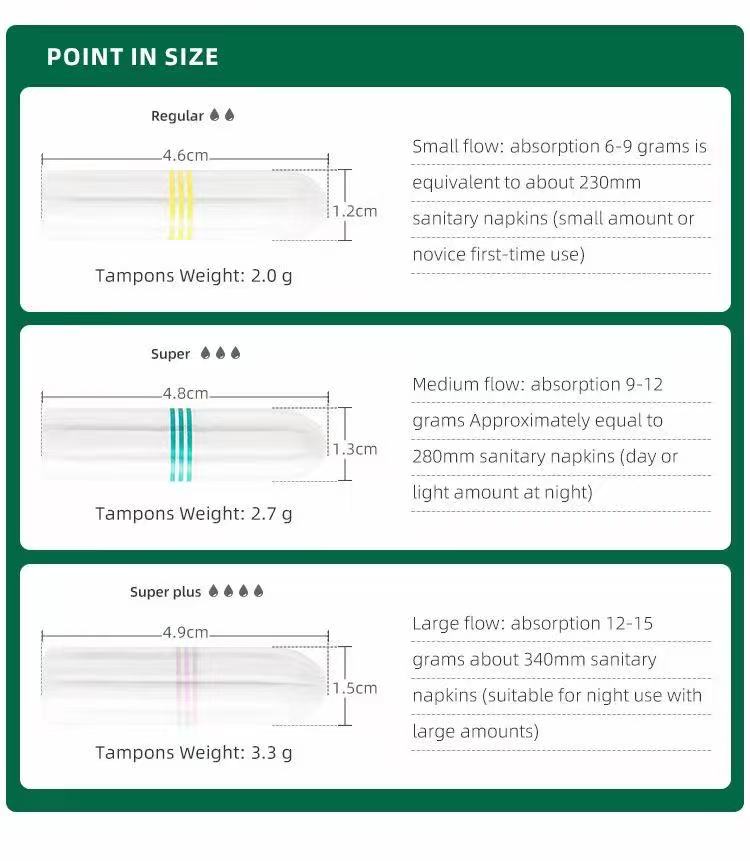
Tampon absorbency refers to the amount of menstrual fluid a tampon can safely absorb. Absorbency levels are regulated and standardized in many markets to ensure user safety.
Common absorbency categories include:
- Light
- Regular
- Super
- Super Plus
Each category serves different consumer needs and usage scenarios.
Standard Absorbency Levels Explained
Light Absorbency
Designed for lighter menstrual flow or early and late cycle use.
Often preferred by first-time users or brands targeting comfort-focused positioning.
Regular Absorbency
The most widely used absorbency level across global markets.
Balanced performance makes it suitable for mass-market private label brands.
Super Absorbency
Designed for heavier flow days.
Requires precise material engineering to ensure both performance and comfort.
Super Plus Absorbency
Higher absorbency for extended protection.
Typically subject to stricter performance testing and compliance requirements.
Can Absorbency Be Customized for Private Label Brands?
Yes. OEM tampon manufacturers can customize absorbency levels based on brand positioning and target market regulations.
Customization may include:
- Adjusting cotton density
- Modifying core structure
- Fine-tuning tampon length and diameter
- Aligning with regional absorbency standards
Customization allows brands to differentiate products beyond standard categories.
Absorbency Standards & Market Regulations
Absorbency standards vary by market.
Manufacturers align products with:
- FDA absorbency classifications (United States)
- European regulatory guidelines
- Market-specific testing requirements
Compliance ensures products meet safety expectations and labeling requirements. How Absorbency Affects Manufacturing Cost
Absorbency level impacts:
- Material consumption
- Production complexity
- Quality control requirements
Higher absorbency products typically require more material and testing, which can increase unit cost. OEM manufacturers help brands balance performance, safety, and cost efficiency.
Sampling & Testing for Custom Absorbency
Before mass production, manufacturers conduct:
- Absorbency performance testing
- Consistency verification
- Safety checks
- Sample validation with the brand
Sampling ensures the product performs as intended before large-scale production.
Choosing the Right Absorbency Mix for Your Brand
Private label brands often offer:
- A core range (Regular + Super)
- Optional Light or Super Plus extensions
The optimal mix depends on:
- Target consumer group
- Retail positioning
- Regulatory environment
- Cost strategy
Manufacturers provide guidance based on market experience.
Absorbency Customization as a Brand Differentiator
Custom absorbency design allows brands to:
- Improve user comfort
- Target niche consumer needs
- Align with sustainability or material choices
- Build a stronger product identity
This is especially important in competitive markets.
Work With an OEM Manufacturer for Custom Tampon Absorbency
If you are developing private label or OEM tampons, working with a manufacturer that understands absorbency engineering and compliance is critical.
👉 Contact us to discuss your target market, absorbency requirements, and OEM customization options. We support private label tampon manufacturing with flexible specifications and export-ready compliance.