
When sourcing tampons for wholesale or private label production, one of the most important decisions is choosing between applicator and non-applicator tampons.
Different markets prefer different formats. Understanding the structural differences, cost implications, and consumer preferences can help distributors and brand owners select the right product strategy.
If you are working with a professional tampon manufacturer, this guide will help you determine which option is best for your target market in 2026.
What Are Applicator Tampons?
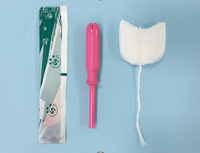
Applicator tampons include a plastic or cardboard tube that helps guide insertion.
The structure typically includes:
- Absorbent cotton or rayon core
- Protective outer cover
- Withdrawal string
- Applicator (plastic or biodegradable cardboard)
Advantages of Applicator Tampons
✔ Easier insertion
✔ More hygienic perception
✔ Popular among first-time users
✔ Strong demand in developed markets
Main Markets
- United States
- Canada
- Australia
- Parts of Asia
Plastic applicators are most common in the US, while biodegradable cardboard applicators are gaining popularity in eco-conscious segments.
What Are Non-Applicator Tampons?
Non-applicator tampons (also called digital tampons) are inserted using fingers, without an applicator tube.
The structure includes:
- Compressed absorbent core
- Protective cover
- Withdrawal string
They are smaller, more compact, and require less packaging material.
Advantages of Non-Applicator Tampons
✔ Lower production cost
✔ Smaller packaging size
✔ Reduced environmental impact
✔ Popular in European markets
Main Markets
- United Kingdom
- Germany
- France
- Scandinavian countries
Non-applicator tampons are often seen as more environmentally friendly due to reduced plastic waste.
Applicator vs Non-Applicator: Key Differences
| Feature | Applicator Tampons | Non-Applicator Tampons |
|---|---|---|
| Insertion Method | Tube-assisted | Manual |
| Cost | Higher | Lower |
| Packaging Size | Larger | Compact |
| Environmental Impact | More material usage | Less waste |
| Popular Markets | US, Australia | Europe |
| Beginner-Friendly | Yes | Moderate |
Understanding regional preference is critical when launching a private label tampon line.
Cost Comparison for Wholesale Buyers
From a manufacturing perspective, applicator tampons typically cost more due to:
- Additional plastic or cardboard material
- More complex production equipment
- Larger packaging requirements
- Higher shipping volume
Non-applicator tampons:
- Require fewer raw materials
- Have simpler production lines
- Reduce shipping costs due to compact size
If you are targeting price-sensitive markets, non-applicator options may offer better margins.
An experienced OEM tampon manufacturer can provide detailed cost breakdowns for each format.
Which Option Is Better for Private Label Brands?
The answer depends entirely on your market strategy.
Choose Applicator Tampons If:
- You target North America or Australia
- Your brand focuses on comfort and convenience
- You want beginner-friendly positioning
- You aim for premium pricing
Choose Non-Applicator Tampons If:
- You target European markets
- Your brand emphasizes sustainability
- You want lower MOQ entry
- You prioritize compact packaging
Some successful brands offer both formats to cover multiple market segments.
Organic & Eco-Friendly Considerations
Eco-conscious consumers are influencing tampon design.
Options now include:
- Biodegradable cardboard applicators
- Organic cotton cores
- Minimalist packaging
- Recyclable outer boxes
Many modern tampon manufacturers now offer eco-friendly customization options for both applicator and non-applicator formats.
Manufacturing Differences
From a factory perspective:
Applicator production requires:
- Applicator assembly machines
- Higher precision alignment
- Additional quality checks
Non-applicator production:
- More streamlined compression process
- Faster output
- Lower mechanical complexity
If you are sourcing from a professional tampon factory in China, confirm whether both production lines are available.
Factories with both capabilities provide greater flexibility for brand expansion.
Frequently Asked Questions
Are applicator tampons safer?
Both types are safe when manufactured according to international hygiene standards.
Is there a difference in absorbency?
No. Absorbency levels (Light, Regular, Super, Super Plus) are independent of applicator type.
Which type has higher profit margins?
Margins depend on your market. Applicators may sell at higher retail prices, while non-applicators reduce production and shipping costs.
Can I customize both types under one private label brand?
Yes. Many OEM tampon manufacturers support multi-format private label production.
Choosing the Right Tampon Manufacturer
If you plan to produce applicator or non-applicator tampons, choose a factory that offers:
- Automated production lines
- Strict quality control
- International certification
- Flexible OEM capability
- Export experience
A reliable tampon manufacturer with dual production capability allows you to adapt to different market demands without changing suppliers.
Final Thoughts
There is no universal “better” option between applicator and non-applicator tampons. The best choice depends on:
- Your target country
- Brand positioning
- Cost structure
- Sustainability strategy
For distributors and private label brands, understanding these differences helps build a more competitive product portfolio.
If you are sourcing:
- Applicator tampons wholesale
- Non-applicator tampons supplier
- OEM tampon production
- Private label tampon manufacturing
Contact us today to discuss your market needs and receive customized production solutions.