What Brands Need to Know Before Requesting a Quotation
OEM tampon manufacturing is often misunderstood. Many brands assume it simply means placing a logo on an existing product, requesting a price, and moving directly into production. In reality, OEM tampon manufacturing is a process-driven partnership that requires alignment on quality standards, hygiene systems, production capability, and long-term scalability.
For brands, distributors, and private label projects, understanding how OEM tampon manufacturing really works is essential to avoid costly mistakes and delays. This article explains the OEM process from a manufacturer’s perspective, clarifies what buyers should prepare before requesting quotations, and shows how professional OEM cooperation reduces risk.
What OEM Means in Tampon Manufacturing (Beyond the Label)
OEM in tampon manufacturing does not mean “customization without responsibility.” It means that the factory produces tampons according to agreed specifications, while the brand takes responsibility for market positioning and sales.
In practical terms, OEM involves:
- Manufacturing under defined technical specifications
- Consistent absorption performance across batches
- Stable hygiene and contamination control
- Repeatable mass production for long-term supply
OEM is not a one-time transaction. It is a structured cooperation model designed for continuity.
Why OEM Tampon Manufacturing Requires Careful Evaluation
Tampons are internal-use hygiene products. Any failure in production consistency or hygiene control can result in:
- Product complaints
- Market withdrawal
- Regulatory scrutiny
- Brand reputation damage
In OEM cooperation, both parties share risk. Brands depend on factories to maintain production integrity, while factories depend on brands to provide clear requirements.
This mutual dependency is why OEM tampon manufacturing requires deeper evaluation than standard private label products.
OEM vs Private Label: Understanding the Practical Difference
Although often used interchangeably, OEM and private label are not always identical.
Private Label (Simplified)
- The factory provides a standard product
- Branding and packaging are customized
- Limited structural changes
OEM (More Technical)
- Product specifications are defined or adapted
- Absorbency, structure, and format may vary
- Packaging and compliance are market-specific
- Long-term repeatability is critical
Professional tampon manufacturers usually support both, but the level of involvement and responsibility differs.
The Foundation of Successful OEM: Clear Specifications
OEM success begins with clarity—not price.
Before requesting a quotation, brands should prepare:
- Target market (EU, US, or other regions)
- Product format (applicator or non-applicator)
- Absorbency levels and range
- Estimated launch volume or trial quantity
- Packaging expectations and branding scope
Clear specifications allow manufacturers to evaluate feasibility accurately and provide realistic quotations.
Reviewing a complete tampon manufacturer overview before this step helps align terminology and expectations with factory processes.
Absorbency and Performance: More Than a Marketing Term
Absorbency is a core functional requirement in tampon manufacturing. From a manufacturing perspective, absorbency depends on:
- Raw material quality
- Core forming consistency
- Compression density
- Production stability
OEM customization of absorbency requires controlled processes. Without process stability, absorbency performance may vary between batches, creating market risk.
Professional manufacturers manage absorbency as a process variable, not a marketing promise.
Applicator vs Non-Applicator: OEM Implications
OEM tampon projects often start with a key decision: applicator or non-applicator.
Applicator Tampons
- Higher production complexity
- Additional assembly steps
- Higher material and QC requirements
- Strong preference in certain markets
Non-Applicator Tampons
- Simpler structure
- Compact packaging
- Lower assembly complexity
- Common in European markets
From an OEM perspective, this choice affects:
- Production cost
- MOQ structure
- Lead time
- Quality control requirements
A professional OEM partner explains these implications clearly before quoting.
Hygiene Systems: The Core of OEM Manufacturing
Hygiene is not optional in OEM tampon manufacturing. It is the foundation.
Professional manufacturers operate:
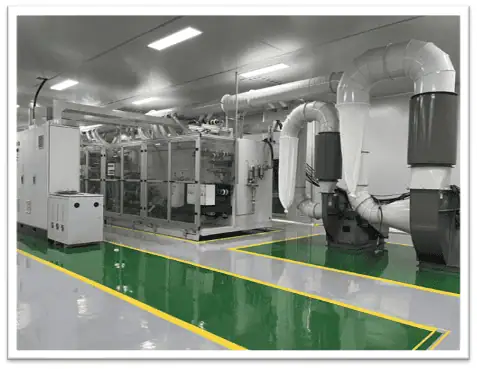
- Controlled production environments
- Personnel hygiene protocols
- Environmental monitoring systems
OEM cooperation assumes that hygiene standards remain consistent across all branded products. Factories that cannot explain hygiene management in detail introduce unacceptable risk.
Quality Control in OEM Tampon Manufacturing
OEM quality control is not limited to final inspection.
Professional QC systems include:
- Incoming raw material inspection
- In-process monitoring of core forming and assembly
- Hygiene checks during production
- Final inspection and batch traceability
OEM partners must ensure that every batch meets the same standard—not just the first one.
MOQ and Trial Orders in OEM Cooperation
MOQ exists to protect production stability and cost structure. Extremely low MOQs often indicate:
- Manual-heavy processes
- Reduced QC investment
- Inconsistent hygiene control
Professional manufacturers understand the need for validation and often support structured trial orders. These allow brands to:
- Verify product quality
- Test market response
- Confirm production stability
Trial orders are not exceptions—they are part of a controlled OEM cooperation framework.
Packaging and Labeling: Compliance Comes First
In OEM tampon manufacturing, packaging is not just branding—it is part of product safety and compliance.
Packaging decisions affect:
- Hygiene protection
- Transport stability
- Market labeling requirements
- Cost and lead time
Experienced manufacturers advise on packaging feasibility and compliance before production begins, reducing downstream issues.
Communication Quality Determines OEM Success
OEM projects fail as often due to communication breakdown as to technical issues.
Professional OEM cooperation requires:
- Clear documentation
- Structured communication
- Transparent feedback
- Realistic timelines
Factories that explain constraints and risks early help brands avoid costly mistakes.
Common OEM Mistakes Brands Make
Brands entering OEM tampon manufacturing often make avoidable errors, such as:
- Requesting price before defining specifications
- Ignoring hygiene and QC explanations
- Underestimating the MOQ logic
- Assuming samples guarantee mass production quality
These mistakes delay launches and increase sourcing risk.
How Professional Buyers Approach OEM Requests
Experienced buyers treat OEM inquiries as technical discussions, not price negotiations.
They typically:
- Prepare structured RFQs
- Clarify market and compliance needs
- Ask process-related questions
- Evaluate communication quality
This approach leads to stronger partnerships and smoother launches.
OEM as a Long-Term Manufacturing Strategy
OEM tampon manufacturing works best when viewed as a long-term strategy rather than a short-term cost decision.
Strong OEM partnerships offer:
- Stable supply
- Predictable quality
- Scalable production
- Continuous improvement
This stability supports brand growth and market confidence.
Final Thoughts: OEM Success Starts Before the First Quote
OEM tampon manufacturing is not complicated—but it is structured.
Brands that succeed:
- Understand manufacturing realities
- Respect process and hygiene requirements
- Communicate clearly
- Choose partners, not just prices
Starting with the right foundation dramatically increases the chance of long-term success.
Start Your OEM Project with Clarity
If you are planning an OEM or private label tampon project, start with a clear feasibility discussion rather than assumptions.
Contact us with:
- Target market
- Product format and absorbency
- Estimated volume or trial plan
We will respond with:
- OEM feasibility feedback
- MOQ and lead time guidance
- Manufacturing and quality overview
👉 Contact us to start a professional, low-risk OEM conversation.