
Introduction
The demand for bulk purchasing of tampons in the UK market is experiencing a significant surge, driven by a confluence of factors including increased awareness of period poverty, institutional initiatives to provide free sanitary products, and the growing entrepreneurial spirit in the private label sector. This comprehensive guide aims to demystify the process of acquiring tampons in bulk within the UK, addressing critical aspects such as procurement channels, pricing strategies, logistical considerations, and essential selection criteria. Whether you are a school administrator, a retail business owner, or an aspiring private label brand founder, understanding the nuances of the UK bulk tampon market is paramount to making informed and cost-effective decisions. This article will navigate the complexities of the market, offering insights into where to buy, how to evaluate costs, and what to look for to ensure quality and compliance in 2025.
Common Scenarios for Bulk Purchasing Tampons in the UK
The increasing trend of bulk tampon purchasing in the UK is fueled by several distinct scenarios, each with its unique motivations and requirements. Understanding these common use cases provides context for the diverse needs within the market.
Schools and Institutions Providing Free Products
One of the most significant drivers for bulk tampon procurement is the widespread implementation of schemes to combat period poverty. The UK government, particularly in England, has established the Period Products Scheme, which mandates and funds the provision of free period products in state-maintained schools and colleges [1]. Similarly, Scotland has gone a step further with pioneering legislation, the Period Products (Free Provision) (Scotland) Act 2021, making free period products a legal right in public buildings, including educational settings [2]. These initiatives aim to ensure that no student misses out on education due to a lack of access to menstrual hygiene products. Consequently, schools, universities, and other public institutions are consistently in the market for large quantities of tampons and other sanitary items. Their procurement needs often involve a mix of product types (e.g., regular, super, pads) to cater to diverse student preferences and flow requirements, alongside considerations for cost control and adherence to health and safety standards [3]. The packaging is also a key factor, with a preference for individually wrapped items suitable for dispensers to maintain hygiene and ease of distribution [4].
Retailers and Wholesalers Stocking Inventory
Retailers, from supermarket chains to independent pharmacies and online stores, regularly engage in bulk purchasing to maintain adequate stock levels and benefit from economies of scale. Wholesalers, acting as intermediaries, also buy in large volumes from manufacturers to supply smaller retailers or institutions. For these entities, the primary motivations are competitive pricing, consistent supply, and the ability to offer a variety of brands and product types to their customer base. They are acutely aware of the price per unit and often seek to minimize shipping costs and other overheads to maximize profit margins. The abolition of the ‘tampon tax’ (VAT on period products) in the UK as of January 1, 2021, has also influenced pricing strategies, though reports suggest that not all savings have been fully passed on to consumers [5, 6].
Private Label Brand Founders
The burgeoning market for private label and OEM (Original Equipment Manufacturer) feminine hygiene products presents another significant scenario for bulk purchasing. Entrepreneurs and established businesses looking to launch their own tampon brands, often with a focus on organic, sustainable, or niche products, need to procure tampons in bulk from manufacturers. This involves working closely with suppliers to customize product specifications, packaging design, and branding. For these brand founders, bulk purchasing is the foundational step in creating a viable product line, requiring careful consideration of minimum order quantities (MOQs), quality control, and certifications (such as GOTS for organic cotton) to ensure their products meet both regulatory standards and consumer expectations [7]. The goal is to establish a unique brand identity while leveraging the cost efficiencies of large-scale production.
Procurement Channels Comparison
When considering bulk tampon purchases in the UK, buyers have several distinct channels, each offering different advantages and disadvantages in terms of price, convenience, and product range.
Local Supermarkets / Pharmacies (Bulk Packs)
While not typically considered a true ‘bulk’ channel in the wholesale sense, local supermarkets and pharmacies like Boots or Superdrug do offer larger ‘bulk packs’ of tampons. These are generally aimed at individual consumers looking for better value than standard pack sizes.
Advantages:
Accessibility: Easily accessible for immediate needs.
Convenience: Can be purchased alongside regular groceries or pharmacy items.
Familiarity: Consumers are often familiar with the brands and product types available.
Disadvantages:
Higher Unit Cost: Even bulk packs in retail stores will have a significantly higher unit cost compared to genuine wholesale or manufacturer-direct purchases [8].
Limited Quantity: Not suitable for very large institutional or commercial orders.
Limited Variety: The range of brands and specific product types (e.g., organic, different applicator materials) might be restricted.
Online Retailers (Amazon, Boots, Superdrug, etc.)
Major online retailers offer a broader selection and often more competitive pricing than physical stores, especially for larger consumer-oriented packs or multi-packs. Amazon UK, for instance, lists various brands with options for bulk quantities of feminine hygiene products [9]. Some brands like Grace & Green also sell directly through their own e-commerce platforms, offering bulk options for businesses [10].
Advantages:
Wider Selection: Access to a greater variety of brands, absorbencies, and applicator types.
Convenience: Easy to order from anywhere, anytime.
Price Comparison: Easier to compare prices across different brands and sellers.
Delivery: Often offers fast delivery across the UK, with some providers offering free shipping for larger orders or subscriptions [10, 11].
Disadvantages:
Still Higher than Wholesale: While better than physical retail, prices may still not match direct wholesale rates for very large volumes.
Shipping Costs: For extremely large orders, shipping costs can become a significant factor if not managed carefully.
Authenticity Concerns: While less common for established brands, buyers should always verify seller reputation on marketplaces.
Wholesalers / Direct from Manufacturers
This is the most cost-effective channel for genuine bulk purchasing, suitable for schools, institutions, retailers, and private label brands. Companies like PHS Direct, Harrisons Direct, and Grace & Green (for their own brand) operate as wholesalers or manufacturers offering direct bulk sales [10, 12, 13].
Advantages:
Lowest Unit Cost: Significantly reduced per-unit prices due to economies of scale.
Customization: Manufacturers can offer private label options, allowing for brand development and specific product requirements (e.g., organic cotton, specific applicator types) [7].
Consistent Supply: Direct relationships can ensure a stable and reliable supply chain.
Certifications: Easier to verify product certifications (CE, ISO, GOTS) and compliance directly with the source [14].
Disadvantages:
Minimum Order Quantities (MOQ): Wholesalers and manufacturers typically have higher MOQs, which might be prohibitive for smaller buyers [10].
Logistics: Requires more robust logistics planning for storage and distribution.
Payment Terms: May involve different payment structures (e.g., upfront payments, credit accounts) compared to retail.
Less Flexibility: Once a large order is placed, changes or returns can be more complex.
Table 1: Comparison of Bulk Tampon Procurement Channels in the UK
| Feature | Local Supermarkets / Pharmacies | Online Retailers | Wholesalers / Manufacturers Direct |
| Unit Cost | Highest | Medium | Lowest |
| Quantity | Small to Medium | Medium to Large | Very Large |
| Variety | Limited | Broad | Broad (including custom options) |
| Convenience | High | High | Medium (requires more planning) |
| MOQ | None | Low to Medium | High |
| Certifications | Assumed (brand dependent) | Assumed (seller dependent) | Directly verifiable |
| Target Buyer | Individuals, small businesses | Small to Medium Businesses | Institutions, Retailers, Brands |
Price & Cost Breakdown
Understanding the true cost of bulk tampon purchasing goes beyond the sticker price. Several factors contribute to the overall expenditure, and a thorough breakdown is essential for effective budgeting and cost control.
Single Unit Price Comparison (Retail vs. Wholesale)
The most significant advantage of bulk purchasing is the reduction in the single-unit price. Retail prices for tampons in the UK can vary widely. For instance, a pack of 20 Tampax Regular Tampons might cost around £3.40, equating to approximately 17p per tampon [15]. Other brands or supermarket own-labels might be cheaper, with some as low as 5p per unit, though an average often hovers around 10-18p per unit [16, 17].
In contrast, wholesale prices can dramatically lower this per-unit cost. While specific wholesale price lists are typically not publicly available and require direct inquiry, suppliers like Grace & Green emphasize “competitive pricing on every bulk order” and offer “cost-effective bulk packs” [10]. For example, a bulk case of 600 non-applicator tampons might be priced to achieve a significantly lower per-unit cost than retail. The savings are substantial, making wholesale the only viable option for institutions or businesses requiring large volumes.
Shipping Costs, Customs Duties, and Hidden Fees
When procuring tampons in bulk, especially from dedicated wholesalers or manufacturers, it’s crucial to account for additional costs beyond the product price:
Shipping Costs: These can vary based on the volume, weight, and destination within the UK. Many bulk suppliers offer fast delivery across the UK, often within 3-5 business days [10]. Some, like John Preston, apply a local area delivery charge for orders under a certain threshold (e.g., £6.80 plus VAT for mainland UK orders under £200) [18]. Larger pallet deliveries may incur specific charges determined by postcode [19]. It’s common for suppliers to offer free shipping for orders exceeding a certain value or for subscription services [11]. Always clarify shipping costs upfront.
Customs Duties: As of January 1, 2021, following Brexit, the UK abolished the ‘tampon tax’ (VAT) and also removed importation duties on period products [6, 20]. This means that tampons imported into the UK are generally not subject to customs duties, which simplifies the cost calculation for international bulk purchases. However, it’s always advisable to confirm the latest regulations, especially for very large or specialized imports.
Hidden Fees: These can include administrative charges, handling fees, or surcharges for specific delivery requirements (e.g., timed delivery, delivery to difficult-to-access locations). While less common with reputable bulk suppliers, it’s important to request a comprehensive quote that itemizes all potential costs. For private label ventures, additional costs might include tooling fees, design fees, or specific packaging requirements.
Table 2: Potential Cost Components in Bulk Tampon Procurement
| Cost Component | Description | Impact on Total Cost |
| Unit Price | Cost per individual tampon (significantly lower in bulk) | Primary cost driver, optimized through bulk buying |
| Shipping/Delivery | Transportation of goods from the supplier to the buyer | Varies by volume, distance, and supplier policy |
| VAT | Value Added Tax (0% on period products in the UK since Jan 2021) | No direct impact since the abolition of the ‘tampon tax’ |
| Customs Duties | Taxes on imported goods (0% on period products in the UK since Jan 2021) | No direct impact since the abolition of import duties |
| Hidden Fees | Administrative, handling, special delivery charges, tooling fees (for PL) | Can add unexpected costs; always clarify |
Common Questions & Selection Criteria
When purchasing tampons in bulk, several key considerations arise, influencing both the suitability of the product for its intended use and its overall value proposition. Addressing these common questions and understanding the selection criteria is crucial for making informed decisions.
Regular vs. Super Absorbency Selection
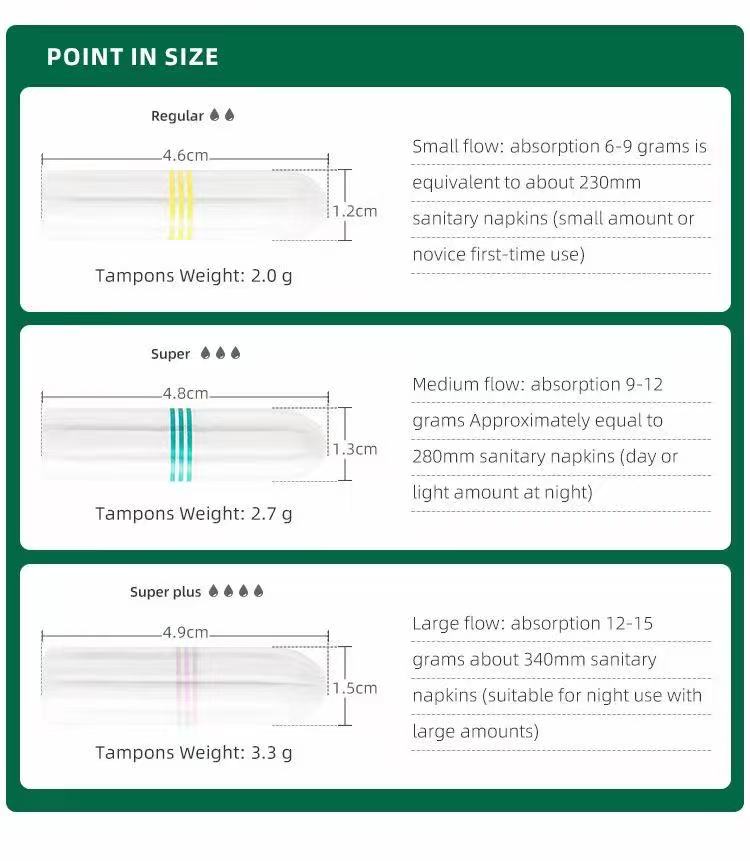
Tampons are primarily categorized by their absorbency levels, with ‘Regular’ and ‘Super’ being two of the most common. The choice between these, or a mix of both, depends heavily on the target users’ needs. Regular absorbency tampons are designed for light to moderate flow, while Super absorbency tampons are suitable for moderate to heavy flow.
For institutions like schools, it is vital to provide a range of accommodations to cater to the diverse needs of students. A common practice is to offer a mix of Regular and Super absorbency tampons, and often pads as well, to ensure all individuals can find a product that meets their specific requirements [3]. Data suggests that ‘Regular’ absorbency tampons hold a significant market share, with some reports indicating over 50% of the market, while ‘Super’ absorbency also sees substantial demand and growth [21, 22]. Understanding the demographics of the user base (e.g., age, typical flow patterns) can help in determining the appropriate ratio of different absorbencies for bulk orders.
Plastic Applicator vs. Non-Applicator (or Cardboard Applicator)
The choice of applicator type is another significant factor. Tampons are available with plastic applicators, cardboard applicators, or as non-applicator (digital) types. Each has its pros and cons:
Plastic Applicators: Often preferred for their smooth surface, which can make insertion easier and more comfortable. They are widely used and have a strong market presence in the UK [23]. However, they raise environmental concerns due to plastic waste.
Cardboard Applicators: A more environmentally friendly alternative to plastic, though some users find them less comfortable to use.
Non-Applicator (Digital) Tampons: These are inserted using a finger, eliminating applicator waste. They are often favored by environmentally conscious consumers and are seen as a growing segment, particularly for their eco-friendly appeal [24].
For bulk purchasers, especially institutions or businesses focused on sustainability, the environmental impact of plastic applicators is a key consideration. Many organic and eco-friendly brands offer non-applicator or cardboard applicator options. When making a bulk purchase, it’s important to gauge the preferences of the end-users and balance comfort with environmental responsibility. Some suppliers offer both applicator and non-applicator options in bulk, allowing for a mixed provision [10].
Certification Standards (CE, ISO, GOTS)
Ensuring the quality, safety, and ethical production of tampons is paramount, especially when purchasing in bulk for distribution to others. Several certification standards provide assurance in these areas:
CE Marking: This indicates that a product complies with European health, safety, and environmental protection standards. While tampons are generally not classified as medical devices in the UK, CE marking is a recognized standard for many products sold within the European Economic Area and signifies adherence to relevant directives [14, 25].
ISO 13485: This is an international standard for quality management systems specifically for medical devices. Although tampons are not typically medical devices in the UK, many reputable manufacturers voluntarily adhere to ISO 13485, demonstrating a commitment to high-quality manufacturing processes and product safety [14, 26]. This is a strong indicator of a supplier’s reliability.
GOTS (Global Organic Textile Standard): For tampons made from organic cotton, GOTS certification is the gold standard. It ensures that the cotton is organically grown and that the entire manufacturing process, from harvesting to labeling, is environmentally and socially responsible. GOTS-certified products are free from harmful chemicals, chlorine bleaches, and synthetic pesticides, making them a preferred choice for health-conscious and environmentally aware consumers [14, 27].
When selecting a bulk supplier, always inquire about their certifications. Reputable suppliers will readily provide documentation and information regarding their adherence to these standards, offering peace of mind regarding product quality and safety.
Conclusion & Recommended Next Steps
Navigating the UK market for bulk tampon purchases requires a strategic approach, balancing cost-effectiveness with quality, ethical considerations, and logistical efficiency. The landscape in 2025 is shaped by a growing emphasis on period dignity, sustainability, and informed consumer choices. For schools and institutions, the provision of free period products is a critical social responsibility, while retailers and private label brands seek to meet evolving consumer demands with competitive and compliant offerings.
Key Takeaways for Bulk Purchasing:
Channel Selection: For genuine bulk needs, direct engagement with wholesalers or manufacturers offers the most significant cost savings and customization options, albeit with higher MOQs. Online retailers provide a good balance for medium-sized orders, while local stores are best for immediate, smaller-scale needs.
Cost Analysis: Always look beyond the per-unit price. Factor in shipping costs, potential hidden fees, and the overall value proposition. The abolition of VAT and import duties on period products in the UK simplifies cost calculations but doesn’t eliminate the need for comprehensive financial planning.
Product Selection: Understand the needs of your end-users. Offer a mix of absorbencies (Regular, Super) and consider the environmental impact of applicator types (plastic, cardboard, non-applicator). The trend towards organic and sustainable options is strong and should be reflected in product choices.
Quality and Compliance: Prioritize suppliers who can demonstrate adherence to relevant certification standards such as CE marking, ISO 13485, and GOTS for organic products. These certifications are crucial indicators of product safety, quality, and responsible manufacturing practices.
Recommended Next Steps:
Assess Your Needs: Clearly define the quantity, types, and specific features (e.g., organic, applicator type) of tampons required. Consider the demographics of your user base.
Research Suppliers Thoroughly: Identify potential wholesalers or manufacturers that align with your values and requirements. Request detailed product specifications, certifications, and pricing structures.
Request Samples: Before committing to a large order, always request samples to evaluate product quality, comfort, and packaging firsthand.
Negotiate Terms: Discuss pricing, MOQs, shipping arrangements, and payment terms. For private label ventures, clarify customization options and lead times.
Plan Logistics: Consider storage, distribution, and replenishment strategies to ensure a smooth and continuous supply.
By following these guidelines, bulk purchasers in the UK can confidently navigate the market, secure high-quality products at competitive prices, and contribute to a future where period dignity and sustainability are paramount.
References
[1] Gov.uk. (2025, May 15). Period product scheme for schools and colleges. Retrieved from https://www.gov.uk/government/publications/period-products-in-schools-and-colleges/period-product-scheme-for-schools-and-colleges-in-england
[2] Legislation.gov.uk. (2021). Period Products (Free Provision) (Scotland) Act 2021. Retrieved from https://www.legislation.gov.uk/asp/2021/1/contents/enacted
[3] Educationhub.blog.gov.uk. (2023, September 28). How the Period Products Scheme is removing barriers in education. Retrieved from https://educationhub.blog.gov.uk/2023/09/how-the-period-products-scheme-is-removing-barriers-in-education/
[4] Grace & Green. Buy Bulk Tampons and Pads for Businesses. Retrieved from https://graceandgreen.co/pages/bulk-buy-period-products
[5] The Guardian. (2022, November 10). UK retailers not passing on tampon tax savings to women, report says. Retrieved from https://www.theguardian.com/society/2022/nov/10/uk-retailers-not-passing-on-tampon-tax-savings-to-women-report-says
[6] Wikipedia. Tampon tax. Retrieved from https://en.wikipedia.org/wiki/Tampon_tax
[7] Tamponmanufacturer.com. Tampon Suppliers in China vs Europe | Buyer’s Guide 2025. Retrieved from https://tamponmanufacturer.com/chinese-vs-european-tampon-suppliers-which-is-better-for-your-business/
[8] The Grocer. (2022, August 18). Own-label period products surge in price by up to 57%. Retrieved from https://www.thegrocer.co.uk/news/own-label-period-products-surge-in-price-by-up-to-57/670599.article
[9] Amazon.co.uk. Bulk Quantity Feminine Hygiene Products – Tampax. Retrieved from https://www.amazon.co.uk/Bulk-Quantity-Feminine-Hygiene-Products-Tampax/s?keywords=Bulk+Quantity+Feminine+Hygiene+Products&rh=n%3A65801031%2Cp_89%3ATampax&c=ts&ts_id=65801031
[10] Grace & Green. Buy Bulk Tampons and Pads for Businesses. Retrieved from https://graceandgreen.co/pages/bulk-buy-period-products
[11] Hey Girls. Regular Non-Applicator Tampon Letterbox Subscription. Retrieved from https://www.heygirls.co.uk/shop/regular-non-applicator-tampon-letterbox-subscription/
[12] PHS Direct. Bulk Buy Sanitary Tampons. Retrieved from https://www.phsdirect.co.uk/products/washroom-specialist/sanitary-products/tampons/
[13] Harrisons Direct. Wholesale Sanitary Products. Retrieved from https://www.harrisonsdirect.co.uk/product-category/health-beauty/toiletries-health-beauty/sanitary-products/
[14] Wen.org.uk. ENVIRONMENTAL COALITION – CERTIFICATIONS. Retrieved from https://www.wen.org.uk/wp-content/uploads/Certifications-List.docx.pdf
[15] Waitrose. Tampons. Retrieved from https://www.waitrose.com/ecom/shop/browse/groceries/toiletries_health_and_beauty/period_and_intimate_care/tampons?srsltid=AfmBOoqvW0J94mUz3g_qYCb2EKZE9tprK_YNzAGd-2NrP-J0kMJyWvcf
[16] Tampon. club. Provide free tampons for your employees. Retrieved from https://www.tampon.club/tampon-club-for-folks-who-dont-use-tampons/provide-free-tampons/
[17] Costco.co.uk. Tampax Pearl Compak Super Tampons, 4 x 24 Pack. Retrieved from https://www.costco.co.uk/Grocery-Household/Grocery-Delivery/Tampax-Pearl-Compak-Super-Tampons-4-x-24-Pack/p/335015
[18] John Preston. Care & Protect Regular Non-App Tampon Bulk Case 600. Retrieved from https://www.johnpreston.co.uk/care-protect-regular-tampon-bulk-case-600/
[19] MX Wholesale. Tampax Regular Tampons 20 pack. Retrieved from https://www.mxwholesale.co.uk/products/tampax-regular-tampons-20-pack
[20] Gov.uk. Women’s sanitary products (VAT Notice 701/18). Retrieved from https://www.gov.uk/guidance/vat-on-womens-sanitary-products-notice-70118
[21] Mordor Intelligence. Tampon Market Size, Share & 2030 Growth Trends Report. Retrieved from https://www.mordorintelligence.com/industry-reports/tampon-market
[22] Statista. (2025, July 10). UK: feminine hygiene products usage by tampon 2013-2020. Retrieved from https://www.statista.com/statistics/303533/feminine-hygiene-products-usage-by-tampon-type-in-the-uk/?srsltid=AfmBOoqsJdMRlFoMfA59y9tWwUFajDEh2dsBcvGVKG_3YjKZT0k4hRKf
[23] Gov. Scot. Menstrual products. Retrieved from https://www.gov.scot/binaries/content/documents/govscot/publications/research-and-analysis/2020/02/mapping-economic-behavioural-social-factors-within-marine-plastic-value-chain-scotland/documents/menstrual-products/menstrual-products/govscot%3Adocument/menstrual-products.pdf
[24] Cognitive Market Research. The global tampons market size will be USD 6521.6 million…. Retrieved from https://www.cognitivemarketresearch.com/tampons-market-report
[25] MHRA. Borderlines with medical devices and other products in Great Britain. Retrieved from https://www.gov.uk/government/publications/borderlines-with-medical-devices/borderlines-with-medical-devices-and-other-products-in-great-britain
[26] Yourdaye.com. Sustainable Period Products & Gynae Health. Retrieved from https://www.yourdaye.com/?srsltid=AfmBOoq1iCv6WkHWjjyk9d0O2vzNdFZci2ZbIj8GhsiX02omOB3WxJkd
[27] Global-standard.org. GLOBAL ORGANIC TEXTILE STANDARD (GOTS). Retrieved from https://global-standard.org/images/resource-library/documents/standard-and-manual/GOTS_7.0__SIGNED_.pdf